The Bajada in Padel: What It Is and Where to Play It
The bajada is the shot you get after their lob comes off your back wall. You have turned defense into attack, and now you have a decision most players make on instinct.
Instinct usually says hit it hard somewhere. But the right target changes completely depending on how good your own contact is and where they are standing. Two questions, three answers.
What a bajada is
The bajada is the attacking shot you play off your own back glass. The ball passes you, hits the glass, rebounds out, and you strike it on the way down as it falls back toward the ground.
Bajada means descent in Spanish, and that is the whole idea: you are hitting a descending ball, from high to low, so it travels downward over the net and lands at their feet rather than sitting up for a volley.
It matters because it is the shot that turns defence into attack. Without it, a ball to your back glass is just something you survive. With it, the same ball is your best chance to take the net back.
When the bajada is on, and when it is not
It is on when the ball comes off the glass high enough to hit downward, with room in front of you to swing. Roughly waist height or above at contact, and a step of space between you and the wall.
It is not on when the ball dies low off the glass, when you are late and the ball is already dropping past your knees, or when you are jammed against the wall with nowhere to swing.
In those cases play a deep lob or a controlled ball to the back instead. Forcing a bajada from a bad position is one of the most reliable ways to end a point badly, because you are attacking from a body position that cannot generate control.
How to play it
Move back early and let the ball do its work. The mistake is following the ball to the wall and then having to retreat again as it comes out. Get behind where you expect it to arrive and wait there.
Let it leave the glass properly, then step into contact and hit it in front of your body with a compact swing. There is no need for power. The height you are hitting from and the downward angle do the damage on their own.
Stay low with your knees bent through the whole thing. Standing tall is what turns a bajada into a flat drive that sits up at net height, which is exactly the ball they want.
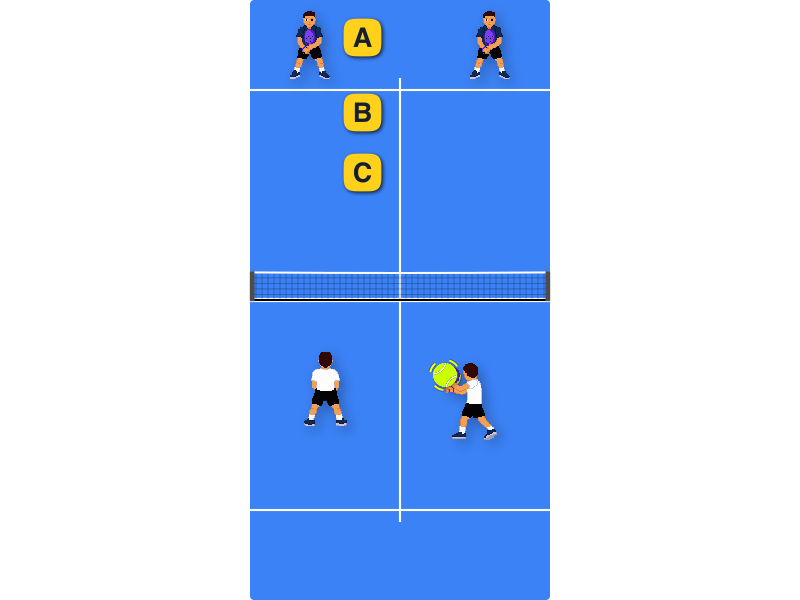
Both of them at the back, and you have an easy ball: go parallel
When the rebound sits up nicely and both opponents are still deep, the parallel line is on. It is the shortest route, it arrives quickest, and it lands where they have furthest to travel.
Parallel is a hard ball to defend from the back. You are not just moving them, you are giving them the least time of any option available.
Parallel works here because they are both deep and the short side is the quickest way to the floor. The ball is past them before either can rotate across, and if it does come back it comes back weak.
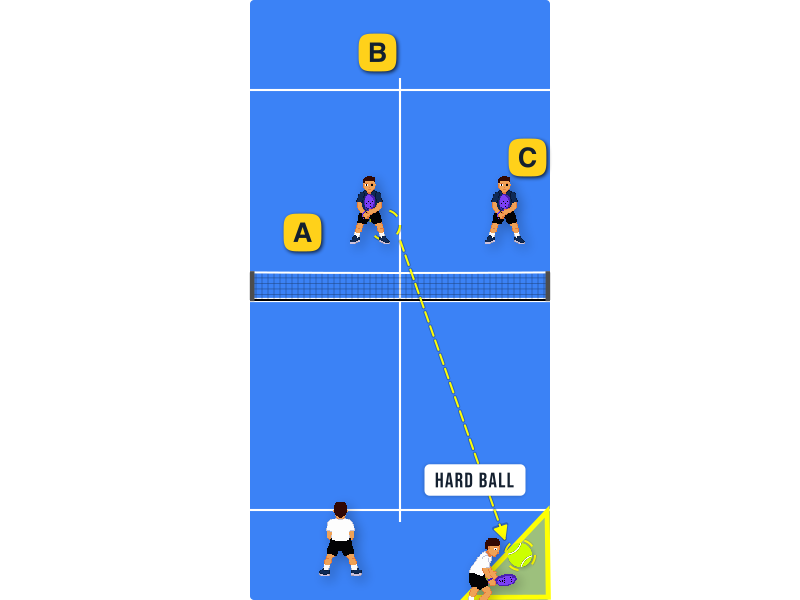
Same position but a difficult ball: go crosscourt
Not every rebound sits up. When the ball is low, awkward or you are stretched, the parallel line stops being a weapon and starts being a way to miss.
Crosscourt is the safety valve. It is the longest ball on the court, which means the most margin over the net and the most room to land. It is easier for them to return, and that is the trade you are making on purpose.
Crosscourt is the safety line. It is the longest part of the court, so there is more room for the ball to land and more margin for a shot you are not fully in control of. You are not trying to win the point here, you are trying to stay in it without giving up the initiative.
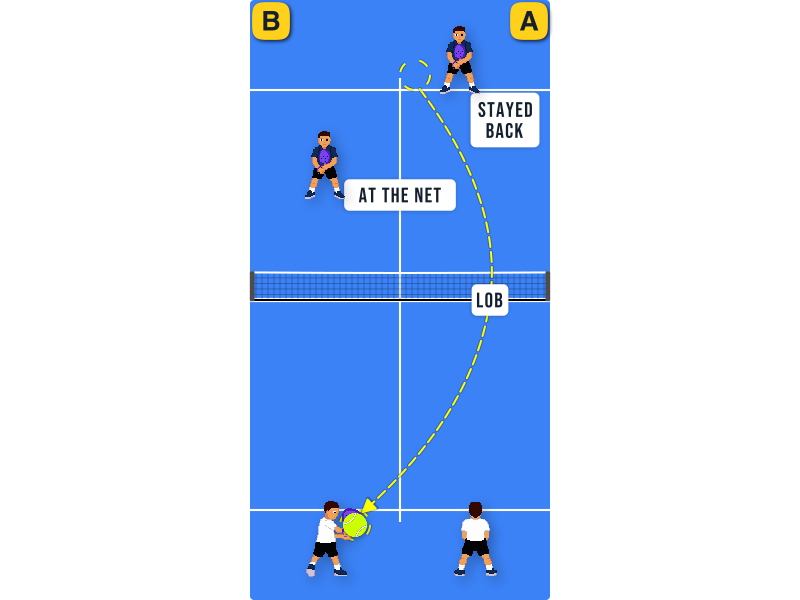
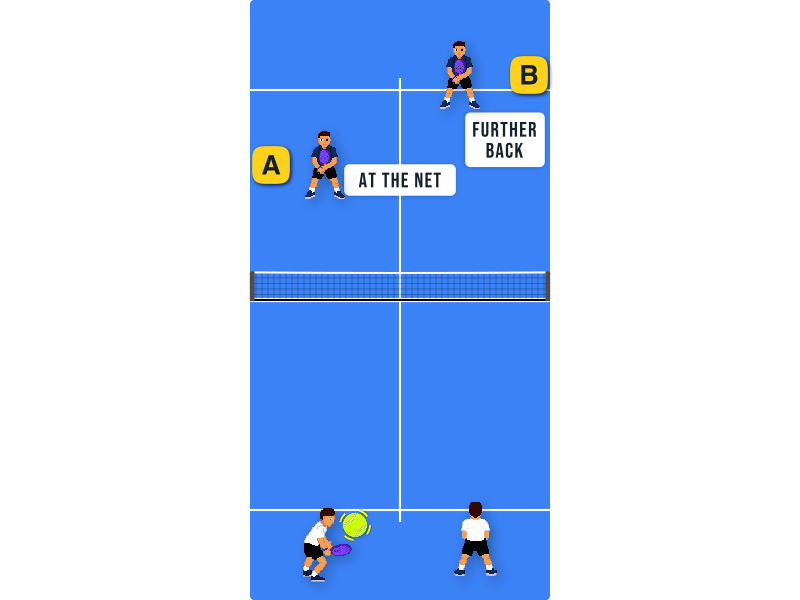
One up and one back: hit at the deep one
Now their pair is staggered. One has come forward, the other is still at the back. The temptation is to attack the space, but the better answer is a person.
Hit at the one who stayed back. The ball travels further so you get more time, they have to play from deeper with less angle, and their partner up at the net never gets a ball to volley.
Going at the deep player keeps the ball away from the one who can volley it. They have handed you the diagonal gap, so use it. Hitting anywhere near the net player on a broken formation is how a good attacking position turns into a point lost in a single shot.
Two questions before you swing
How good is my contact, and where are they standing. That is the whole decision, and both answers are available before the ball reaches you.
Good ball and both deep, go parallel. Awkward ball, go crosscourt and live to attack again. Staggered pair, play the deep one. The bajada does not have to be a winner to be a great shot.
Neither question is about technique. Where are they standing, and how good is this ball. Answer those two and the target is already decided before you start the swing.
What goes wrong
Hitting it flat and hard into the middle of the court. Speed is not what beats a net player. A ball at their feet at moderate pace is far harder to answer than a fast one at hip height.
Playing it from too close to the glass. You end up cramped, the swing shortens, and the ball goes long or into the net.
Treating every glass ball as a bajada. Most of them are not, and a hard smash off the glass is a different problem entirely. The good players are not attacking more often, they are just correct more often about which balls allow it.