How to Attack a Weak Backhand in Padel: Open It First
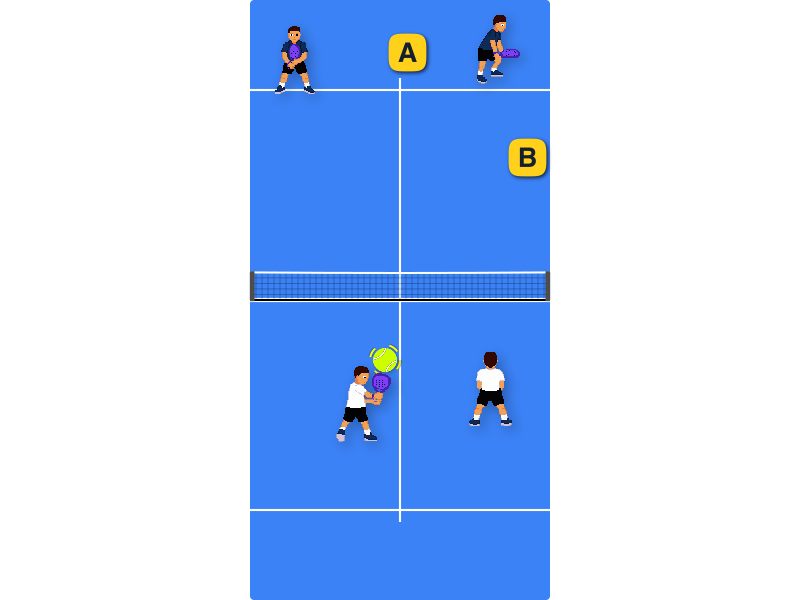
Two games in and you have already worked it out. One of them cannot hit a backhand. It floats, it sits up, it goes short. So you start aiming at it.
And for a while it works. Then it stops working. They start reaching those balls, and the free points dry up. The problem is not your read. The problem is your timing.
The mistake: going there straight away
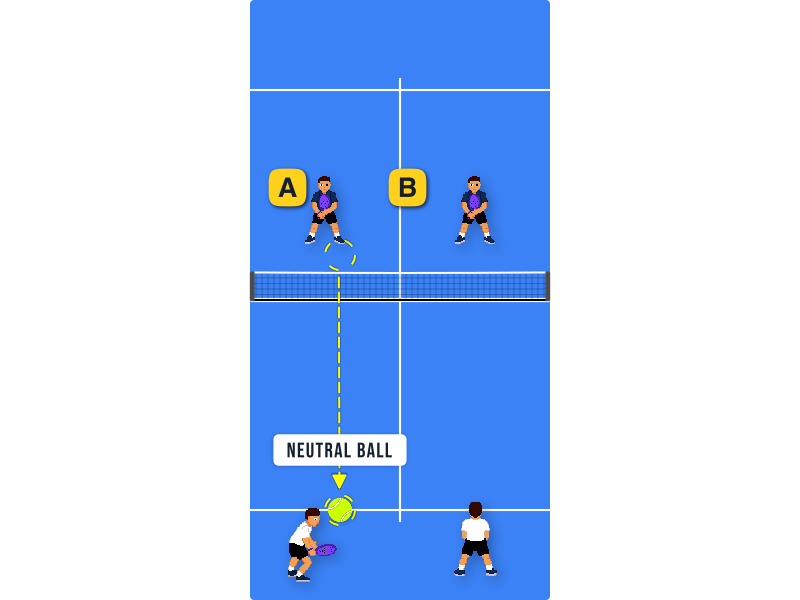
Most players attack a weak backhand the moment they find it. Same target, over and over, from every position on the court.
It is the most predictable thing you can do. And predictable is exactly what a weaker player needs in order to cope.
Why it stops working: they cover it
Nobody knows about a weak backhand more than the person who owns it. They have been hiding it for years.
So they cheat across. They stand a step to that side, they turn early, they run around it when they can. You are hitting into the part of the court they are most ready for. Your best target has quietly become their best-covered one.
The fix: play the middle first
Do not open with the backhand. Open with the middle.
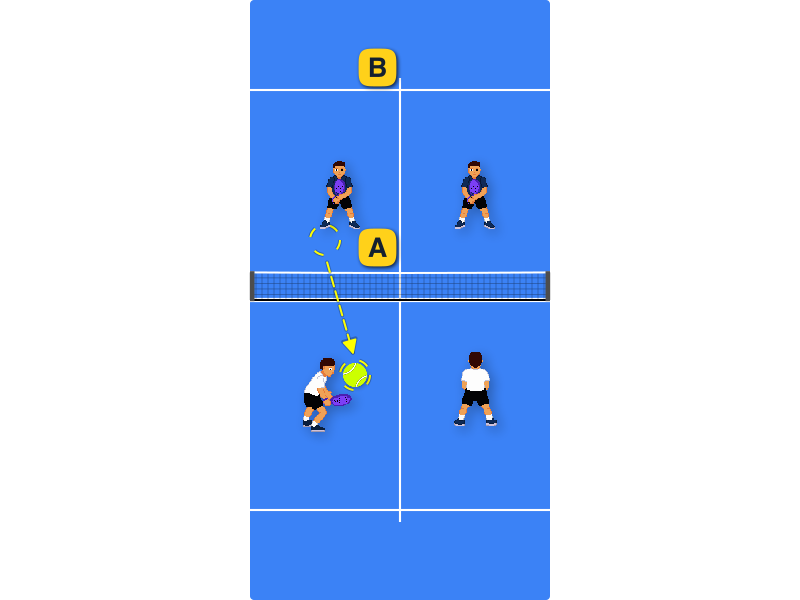
A ball down the middle takes their angles away, so nothing dangerous comes back. More importantly it drags the weak player toward the centre of the court. They have to come and take it, or leave it to a partner who is not set up for it either.
Now the weak side is open
The moment they step across to cover the middle, the side they were protecting is empty. The court you actually wanted is now available.
You did not have to hit harder or find a finer line. You just asked them to move first.
And they answer on the move
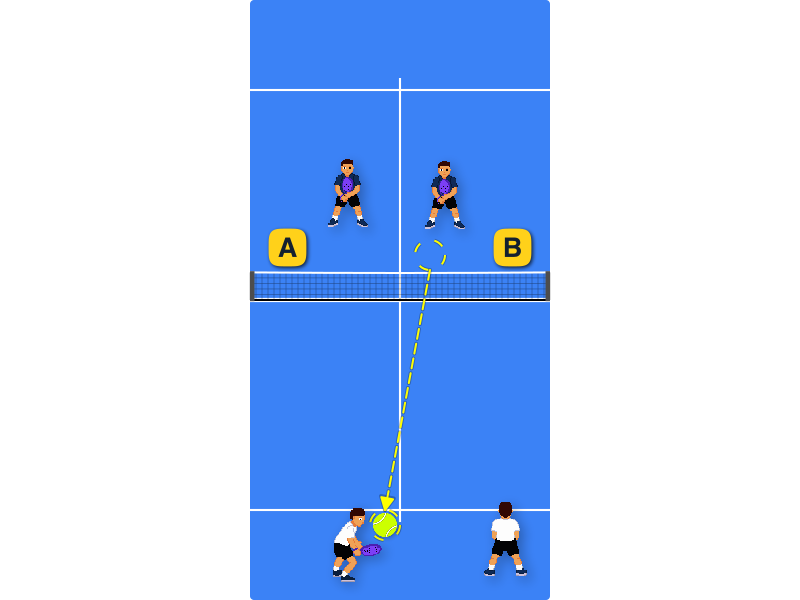
There is a second gain here. A player taking a ball while still moving cannot set their feet, cannot turn properly, and cannot control depth.
So the middle ball does two jobs at once. It opens the space, and it makes their reply worse. That weak reply is the ball you attack.
Open first, then attack
Think of it as two balls, not one. The first ball moves them. The second ball punishes them.
The weak backhand is still your target. You just stopped announcing it. Open their weak side first, then attack it.