Where to Play the Flat Smash in Padel: Parallel, Not Crosscourt
The flat smash is not a placement shot. It is a speed shot. You are not trying to find a clever angle, you are trying to make the ball arrive before anyone can do anything about it.
Which means the only thing that really matters is how long the ball is in the air. Pick the wrong line and you hand back the time you were trying to take away.
What the flat smash is for
The flat smash is the one you hit to end the point. No spin to speak of, hit hard and downward, aimed to be unreturnable rather than to keep them under pressure.
That makes it a different tool from the bandeja and the vibora, which are control shots. Those two exist to keep you at the net while the ball is awkward. The flat smash exists to finish, and it gives up your net position if it does not work.
So the first decision is not where to hit it. It is whether this ball is good enough to hit it at all.
When to choose it over a bandeja
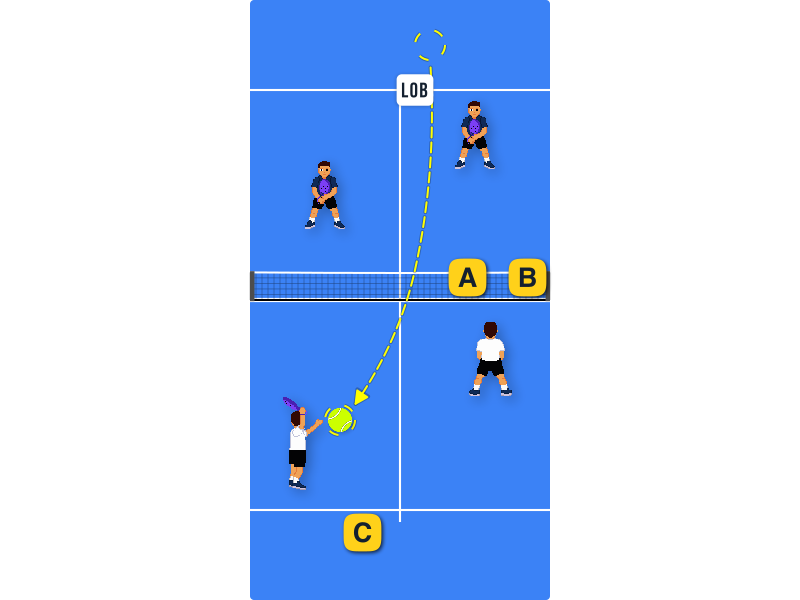
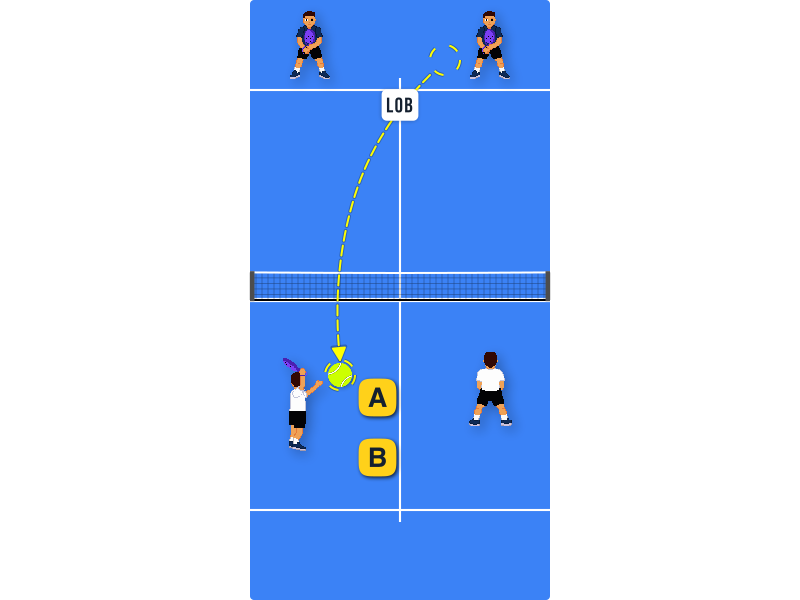
Play it when the lob is short and you can get above the ball comfortably, with your body behind it rather than stretched.
If the lob is deep, or you are moving backwards to reach it, or you are already off balance, the flat smash is the wrong shot and a bandeja is the right one. Attempting a winner from a bad position hands them the net for free.
Almost every flat smash that goes wrong was a shot that should never have been a flat smash. The line goes wrong afterwards, but the decision went wrong first.
Play it parallel
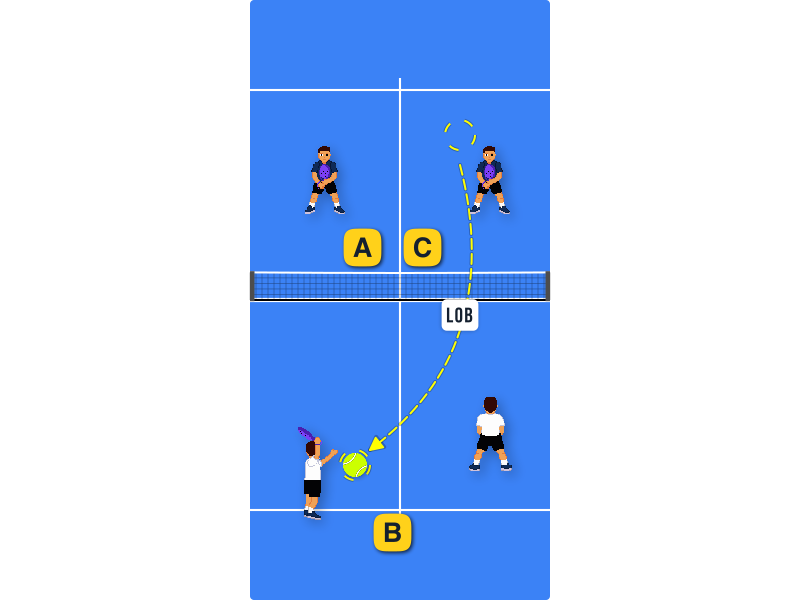
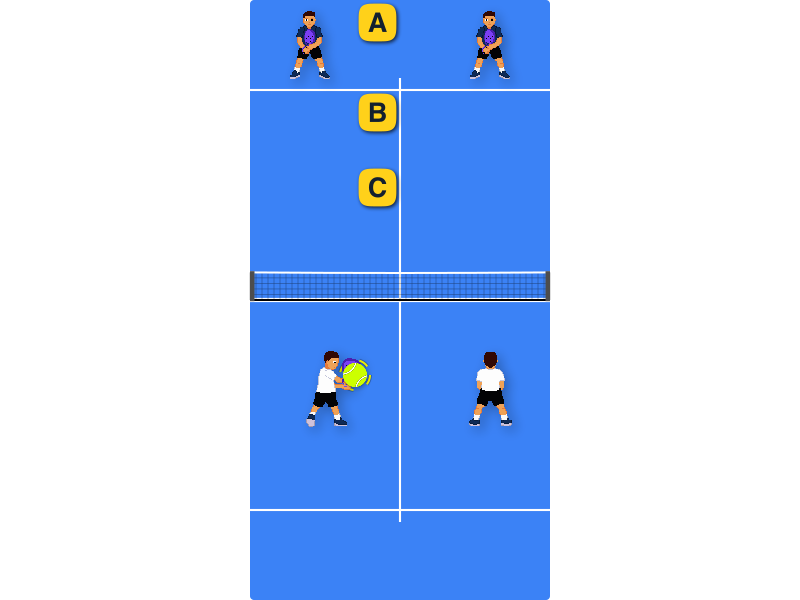
Hit the flat smash down the line on your own side. It is the shortest route to their court, and shortest route means least travel time.
The whole value of the shot is that it gets there fast. Parallel is simply the fastest available line.
Parallel means down the same side you are standing on, into the short corner. It is the shortest distance between your racket and their court, and on a flat smash short distance is the entire point.
Shorter distance means it comes back faster
There is a second benefit that people miss. A parallel smash also rebounds off the side glass and back into play quickly and at a low angle.
So even when they do get a racket on it, the ball is on them again immediately. You are not just hitting fast, you are keeping the whole exchange fast.
You are trying to give them less time than they need. Every metre you subtract from the ball's path is time removed from their reaction, and on a 20m court there are not many metres to work with.
Do not play it crosscourt
Crosscourt looks tempting because the space is wider and the target feels bigger. It is the wrong instinct for this particular shot.
The crosscourt is the longest line on the court. Every extra metre is extra time for them, and time is exactly what the flat smash is supposed to remove.
Crosscourt feels natural because it is the safest line on almost every other shot in padel. That instinct is correct nearly always, and wrong here.
Longer distance gives them time to return
On the diagonal your smash spends noticeably longer in the air. That is enough for a decent defender to read it, get behind it, and put it back.
You hit your hardest shot and they returned it. Not because the smash was bad, but because you gave them the extra half second on the way there.
It is not only the extra metres. A crosscourt smash travels toward the middle of their court, where both of them can reach it, while a parallel one goes to a corner only one of them covers.
Same swing, different line
You do not need to hit the flat smash harder. You need to hit it shorter.
Parallel every time, and let the reduced distance do the work your arm was trying to do.
Nothing about the technique changes between a good flat smash and a wasted one. Same preparation, same contact, same swing. The only difference is which way you were facing when you hit it, and that is decided before you jump.
What goes wrong
Smashing a ball you had to move backwards for. If your weight is going back, the ball has nothing on it and you have given up the net.
Aiming for the corner rather than the court. A flat smash that lands out is a gift, and the parallel line already gives you all the advantage you need without flirting with the lines.
Hitting every overhead flat. Against players who lob well, most of your overheads should be bandejas, and the flat smash should feel like an occasional reward.
Practise the decision, not the shot
Most people practise smashing by hitting as many as possible as hard as possible, which trains the one part that was never the problem.
Instead have someone feed you a mix of deep and short lobs and say out loud, before each one, whether it is a bandeja or a flat smash. Getting that call right nine times out of ten is worth far more than adding pace to a shot you keep choosing at the wrong moment. And if you are ever on the receiving end, returning a big smash is a skill of its own.