The Three Zones of a Padel Court and What to Do in Each
Most tactical mistakes in padel are not really shot choices. They are zone confusion: attacking from a defensive position, or drifting passively while standing somewhere you should be applying pressure.
The court divides into three zones, and each one has a single job. Once you know which one your feet are in, the shot mostly picks itself.
Where the three zones actually are
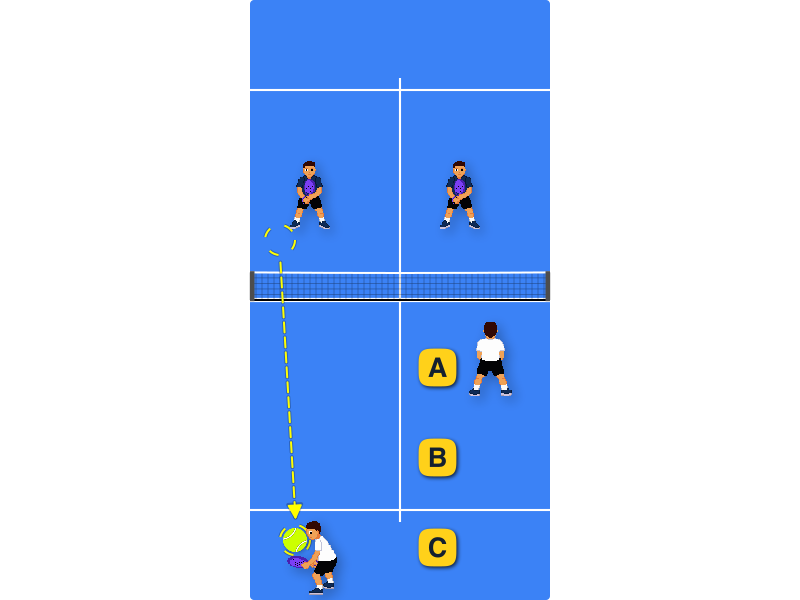
A padel court is 20m long and 10m wide with the net across the middle, so your side is a 10m box. The service line sits 6.95m back from the net. Those two lines are all you need to place yourself.
Offense is roughly 3 to 4m from the net. Not on the net: standing right underneath it gets you lobbed and leaves you no room to move back. Transition runs from there to the service line. Defense is everything behind the service line, back toward the glass.
Three zones, and at any moment your feet are in exactly one of them. Most players could not tell you which, which is the actual problem this article is about.
Defense: be patient
At the back your job is not to win the point. It is to stay in it and wait for a better ball than the one you have.
Return low, keep the ball away from anything they can attack, and let them be the ones who have to force something. Patience here is not passivity, it is the entire strategy.
The mistake is trying to end it. A winner from the back of a padel court, against two opponents already at the net, is close to impossible. Every attempt gives them a shorter and easier ball than the one you started with.
Transition is where points are lost
This zone has a bad reputation and it has earned it. Some players call it no man's land, others the swamp. Around the service line you are too far from the net to volley comfortably, and too far from the back glass to let the ball come to you.
So balls arrive at your feet. You end up half volleying at knee height while two opponents watch from a metre off the net, which is the worst trade available on a padel court.
The zone itself is not the problem. Standing in it is. Transition is a place you pass through, and the only real error is stopping there to see what happens next.
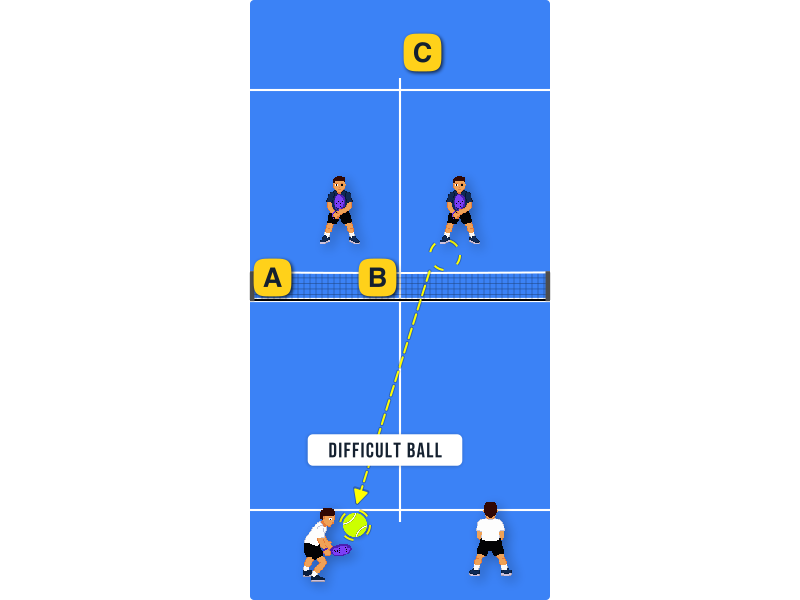
Transition with a difficult ball: go back
The transition zone punishes indecision. If the ball reaching you here is awkward, low or fast, this is not the moment to push forward.
Play it to their backhand and retreat to defense. You have not lost anything. You have declined a bad opportunity and reset to a position where you are solid.
Going back is not a retreat in the bad sense of the word. You are choosing the zone where a difficult ball is easiest to deal with, and back there the glass works for you instead of against you.
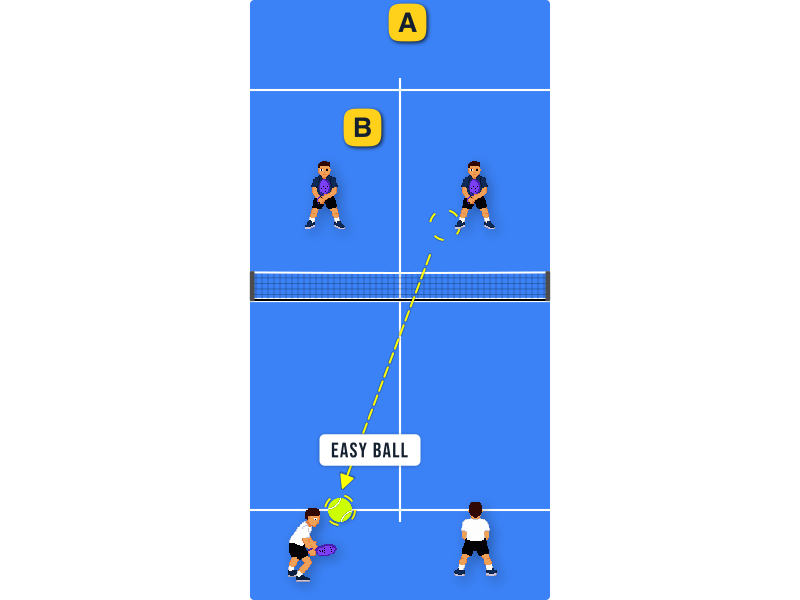
Transition with an easy ball: go forward
Same zone, opposite answer. When the ball arriving is comfortable, this is exactly the moment the transition zone exists for.
Lob, chiquita, or a passing shot, and then keep moving to the net. The mistake is not choosing wrong here, it is standing still and letting the moment pass.
Easy means it comes to you above net height, or slowly, or both. If you have to reach, stretch or improvise, it was not easy, and you are back in the previous section.
Climb in stages, do not sprint the whole way
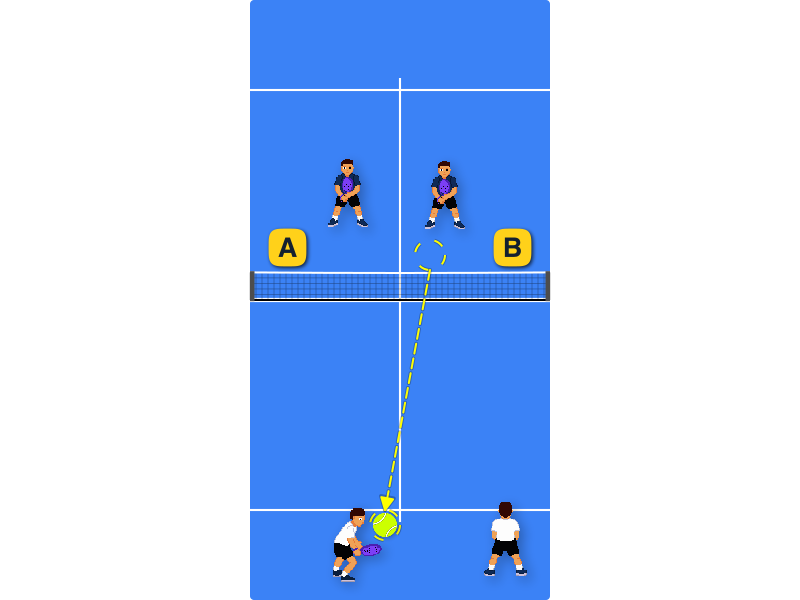
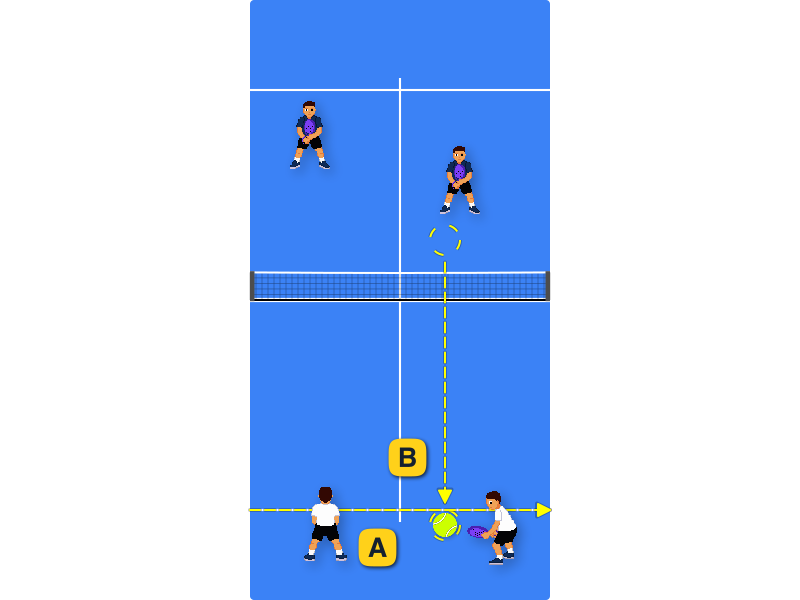
Getting from defense to offense is not one movement. Play the lob or the chiquita that buys you the time, then advance as far as the service line and split step there while they hit.
If the next ball is comfortable, you continue to the net. If it is not, you drop back. Two decisions, each made with the ball already in the air, instead of one blind sprint that strands you in the middle of the court.
This is what good pairs are doing when it looks like they are simply walking forward. They are moving one zone at a time and re-deciding on every ball.
Both of you are in the same zone
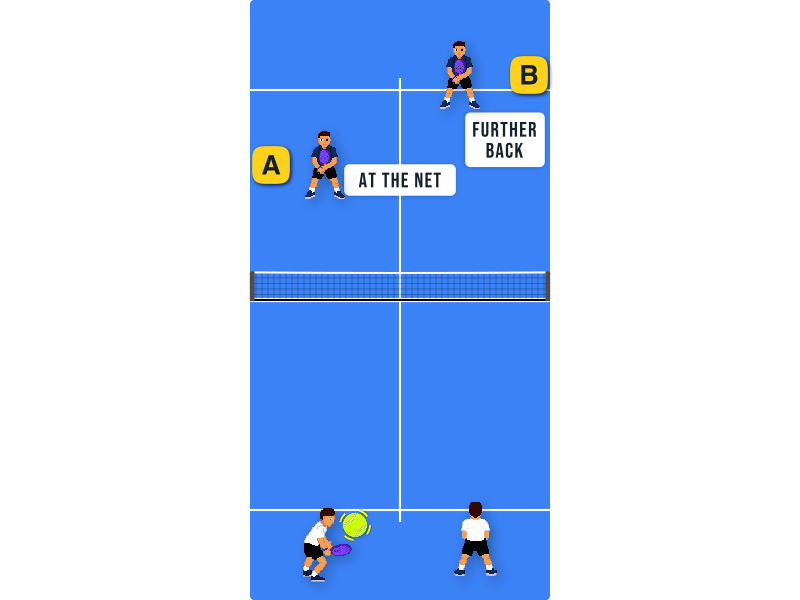
Zones belong to the pair, not the player. If one of you is at the net while the other is still at the back glass, the diagonal between you is wide open and neither of you can do anything about it.
So when your partner is pushed back, you go back too. When your partner takes the net, you go with them. It can feel wrong to give up a good position because your partner lost theirs, but a split pair loses the point anyway, and usually faster.
Being in different zones is the most common tactical mistake in club padel, and it is also the easiest one to stop making.
Offense: put on the pressure
At the net you have earned the right to be aggressive, so be aggressive. This is the one zone where waiting is the wrong instinct.
Forehand volley into the open space, or straight at their feet. You worked to get here, and giving them a free ball is how you end up walking backwards again.
Being at the net and playing it safe is a contradiction. You spent the last four shots earning this position. A soft volley back to the middle of the court hands it back for nothing.
Ask which zone you are in
Patient at the back, decisive in the middle, aggressive at the front. The same ball deserves three different answers depending on where you are standing.
Before your next shot, do not ask what you want to hit. Ask which zone you are in, and let that answer first.