How to Return a Big Smash in Padel: Run Forward, Not Back
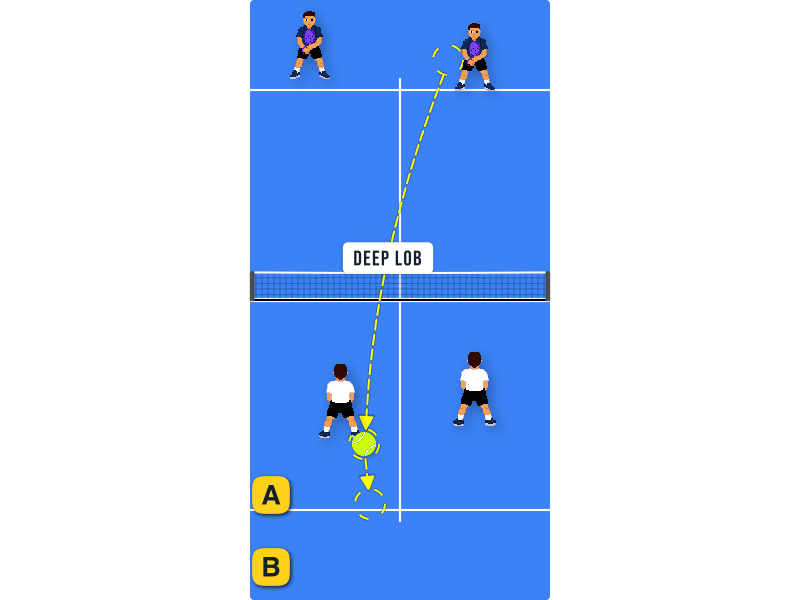
Your lob came up short, they have set up under it, and a big smash is on its way. Everyone's instinct is the same: get back, get deep, buy space.
Against a genuinely hard smash that instinct loses the point every time. The ball is going to be moving faster than you are, and you cannot win a race you started behind.
Why the back glass beats you
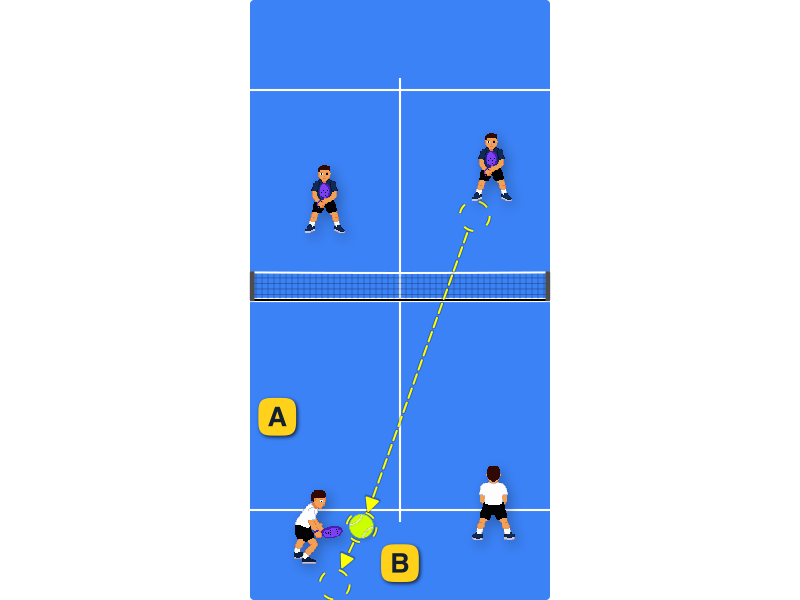
A hard smash arrives with so much energy that the bounce and the rebound off the back glass are enormous. The ball does not sit up near the wall, it comes out fast and travels a long way back toward the net.
That is the part players get wrong. They picture the ball dying in the corner, so they run to the corner. The ball is not going to be there. By the time they arrive, it has already passed them going the other way.
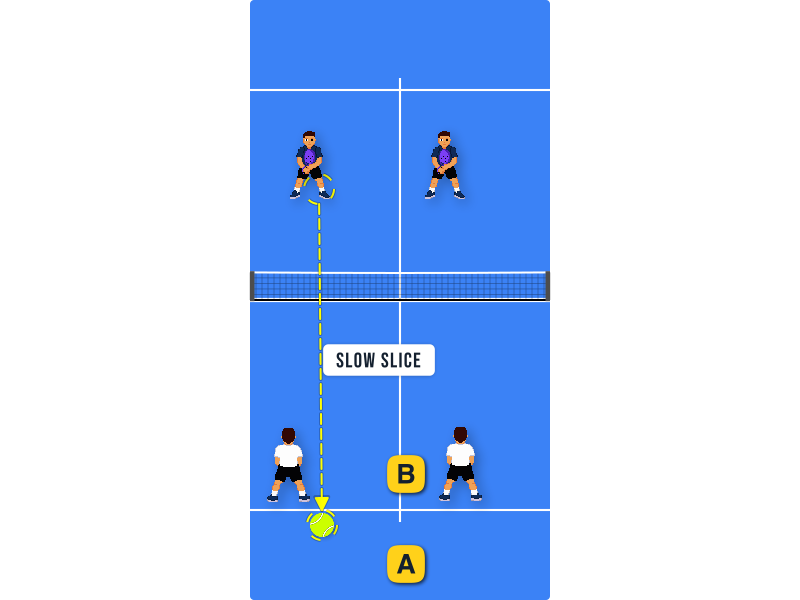
The harder they hit it, the further out it comes, which means the harder the smash, the further forward you should be waiting for it. A slower ball off the glass is an opportunity instead, and that one is the bajada.
Do not retreat to the back
Backing up feels like the safe response. More court in front of you, more time to see it.
But you are running in the same direction the ball is travelling, and it is travelling considerably faster than you. You will arrive late, going backwards, off balance.
Retreating feels right because the ball is going over your head, and every instinct says to follow it. But you are chasing something that will end up in front of you, and you are doing it slower than it travels.
It bounces off the glass too fast to chase
A hard flat smash hits the floor and then the back glass and comes out quickly and at a nasty angle. By the time you have covered the ground, it has already gone past.
This is why the retreat feels so hopeless in the moment. It is not your speed. The geometry was never going to work.
By the time you have turned and covered those few metres, the ball has bounced, hit the glass and come back out past your shoulder. You spend the whole rally arriving where the ball used to be.
Run forward along the fence instead
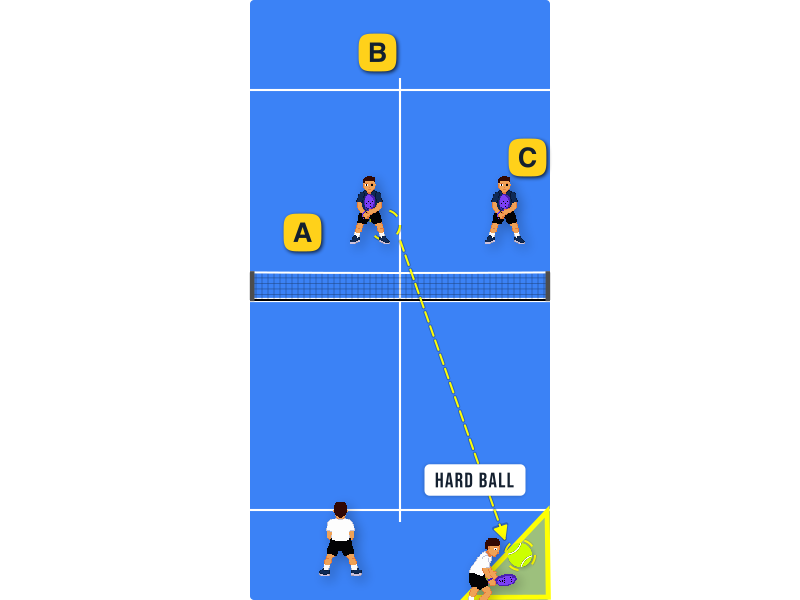
Turn and move forward down the side of the court, close to the fence. You are heading towards where the rebound is going, not trailing behind it.
It feels wrong to run towards a smash. But you are not running at the ball, you are running around it, using the side of the court as your lane.
Along the fence, not through the middle. Running forward through the centre of the court puts you in the ball's path and leaves you playing it on top of yourself, and it also drags you away from the side the rebound is heading for.
Read it before it is hit
You cannot make this decision after the smash. You make it while they are still winding up, from what kind of ball you gave them.
If you hit a short lob and they are set up above the ball, assume it is coming hard and start moving early. If your lob was deep and they are stretching, the ball will be slower and softer and the normal defensive position is fine.
Deciding early is what makes this look calm rather than frantic. The movement itself is not difficult, it is just impossible to do in time if you start once the ball is already travelling.
Now the smash is returnable
Getting there early means you can face the ball, set your feet, and put a racket on it. A defensive lob back is a perfectly good outcome from a position that felt lost.
You will not turn every big smash into an attack. But you turn a guaranteed lost point into a rally that continues, and that is what defending is.
From in front of the rebound you are facing the ball rather than chasing it, and it comes onto your racket at a sensible height. A shot that looked like a winner turns into an ordinary defensive ball.
What goes wrong
Backing into the corner on instinct. It is the natural response to a hard shot and it puts you exactly where the ball will not be.
Trying to answer it aggressively. A returned smash does not need to be good, it needs to exist. A high defensive lob resets the point and takes away everything they built.
Standing and watching. Plenty of smashes that look like winners are perfectly reachable off the glass, and the players who reach them are simply the ones who assumed it was reachable and moved.
It also keeps you in the point
There is a second benefit that is easy to miss. Moving forward means that when you do return the smash, you are already closer to the net than you would have been.
So a good defensive lob from there does not just save the point, it puts you in position to come forward if they answer it poorly. Retreating to the corner leaves you at the back of the court with everything still to do.