Split Step in Padel: How and When to Do It
You watch the ball, you know roughly where it is going, and you still arrive half a step late. It feels like a speed problem. It usually is not.
It is a timing problem, and it starts before the ball is even hit. If you are standing completely still at the moment your opponent makes contact, you are always going to be late.
What a split step actually is
A split step is a small hop you make just before your opponent hits the ball. You land on the balls of both feet, roughly shoulder width apart, knees soft. That landing is the whole point: it leaves your legs bent and under tension, ready to push off in any direction.
It is not a jump. Your feet barely leave the ground, and from the side it looks like a small bounce. Every player above a certain level does it on almost every ball, usually without thinking about it at all.
The mistake: waiting completely still
Most players stand and watch while the other side prepares. Feet planted, weight settled, waiting to see where the ball goes before doing anything.
It feels like the attentive thing to do. You are watching carefully. But watching is not the same as being ready.
Watch a beginner's feet through a rally and there are long stretches where nothing happens at all. They start moving once the ball is already travelling toward them, which is one beat too late on every single ball of the match.
Standing still makes you late
A body at rest has to overcome its own inertia before it can move. That first fraction of a second, spent unfreezing rather than travelling, is the whole margin you needed.
The delay is small, perhaps two tenths of a second. But a padel court is only 10m wide and most balls are decided by less than a metre of reach. Two tenths is exactly the size of the gap between a comfortable forehand and a stretch.
You will still reach most balls. You just reach them a moment later than you should have, and that moment decides what kind of shot you get to play.
Late means you answer on the move
Arriving late means hitting while still travelling. You cannot set your feet, you cannot turn properly, and you cannot control depth.
So the ball you send back is slow, short, or floating. You have just handed them an easy ball, and it started with standing still.
This is why it never feels like a footwork problem. The shot is what visibly goes wrong, so that is what you go and practise. The shot was usually fine. You were just still moving when you played it.
The fix: a small hop as they hit
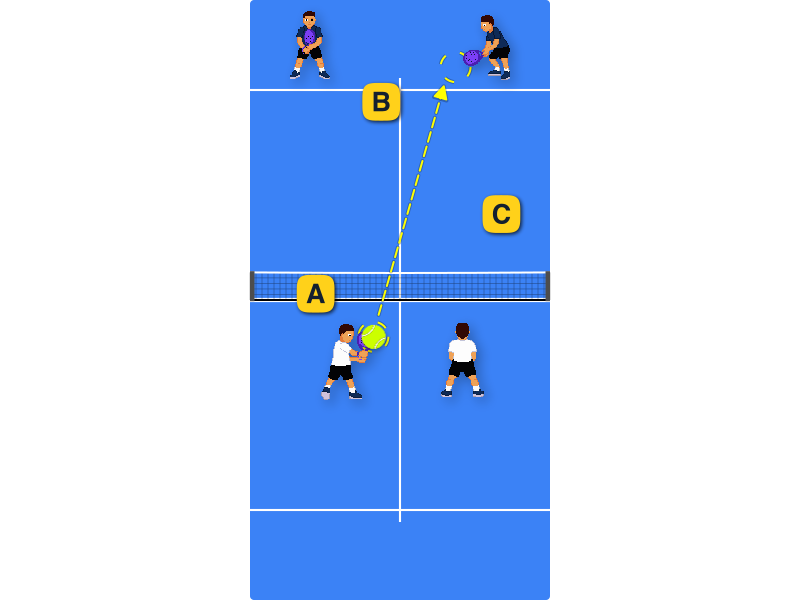
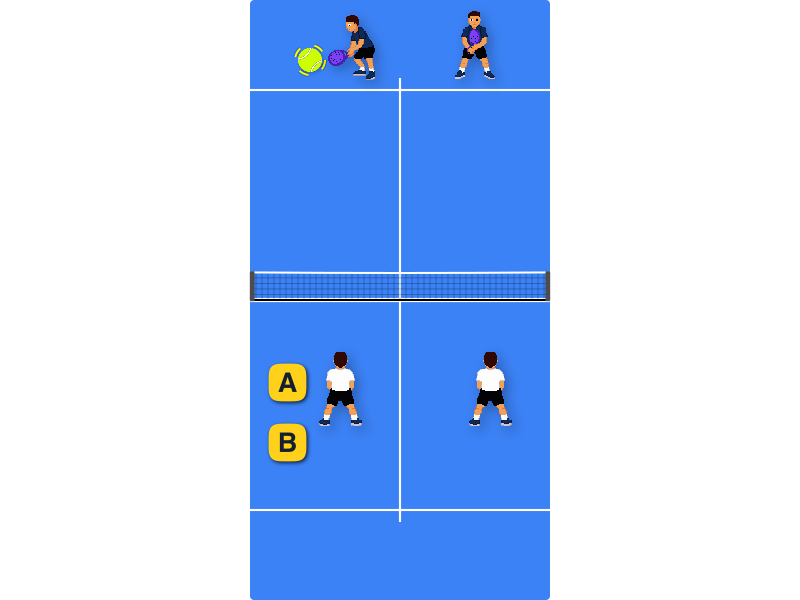
Just before your opponent makes contact, do a small hop and land on the balls of both feet, shoulder width apart. That is the split step.
Timing matters far more than size. It is not a jump, and it is not a stance you hold. It lands as they hit, not after you have seen where the ball is going.
The timing: land as they make contact
This is the part players get wrong, and it is the only part that matters. Start the hop slightly before your opponent's contact so that you land at the moment they strike the ball.
Land too early and you have already absorbed the landing and settled again, which puts you back where you started. Land too late and you are in the air while the ball is travelling, which is worse than doing nothing, because now you cannot push off at all.
Notice what this means: you split before you know where the ball is going. That is deliberate. The split step happens before the information arrives, so that you are already loaded the instant it does.
Now your legs are loaded
Landing from that small hop leaves your legs slightly bent and under tension, which means the first push can go in any direction without a wind-up.
Nothing about your speed changed. You simply removed the delay you were adding yourself, on every single ball, all match.
The padel split step is not the tennis one
If you came from tennis you already split step, and you probably do it too big. In tennis the hop is higher and more explosive, because the court is large and you are genuinely covering ground.
A padel court is 10m by 20m and the walls send balls back to you. A large hop costs time you do not have and leaves you airborne when the ball is already coming off the glass. Keep it low, keep it quick, stay near the ground.
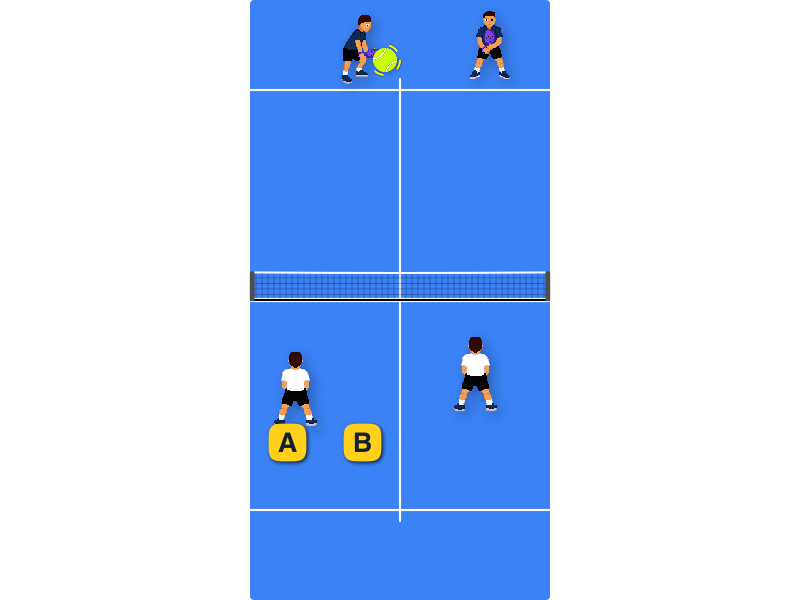
The walls also mean one ball can need two split steps. You split as they hit, you move back with the ball, and then you split again before you play it off the glass. Tennis never asks for that, which is why tennis players often look busy in padel and still arrive late.
Split at the net, not only at the back
Plenty of players who do split step only do it in defence and forget it completely at the net. That is backwards. At the net you have less time, not more.
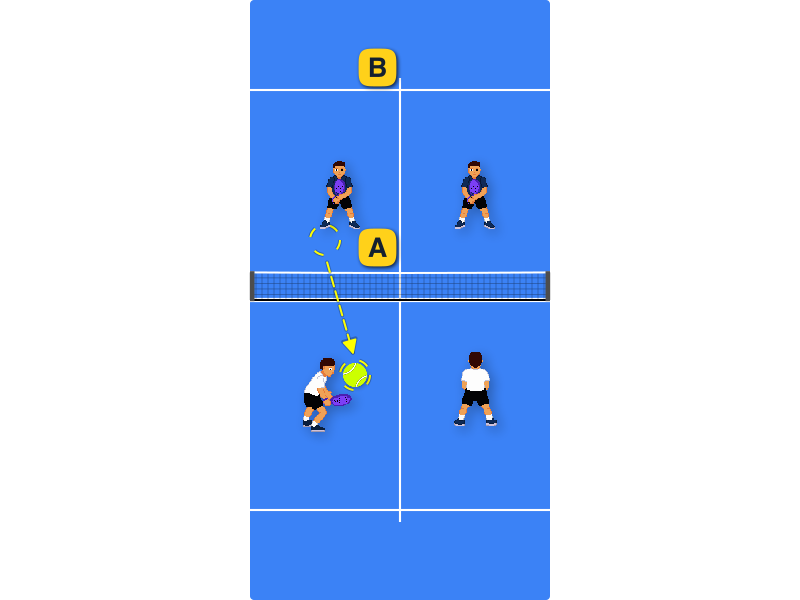
The volley is exactly where a fraction of a second separates a volley into their feet from a defensive block that gives the point back. Split as they hit, land, and let the first step go wherever the ball says. Where that step takes you is net movement.
It matters most against players who lob you. If you are flat-footed at the net, a lob over your head is unreachable. If you landed as they hit, you get to turn and run.
Four things that cancel out your split step
Hopping too high. It is a bounce, not a jump. If you can feel yourself hanging in the air, it is too big and it is costing you the time it was meant to save.
Landing on your heels. The stored energy goes straight into the floor and you have to build it again from nothing. Land on the balls of your feet or do not bother.
Splitting after you see the ball. By then you are reacting, and the whole purpose of the split step is to make that reaction unnecessary.
Doing it once and stopping. It is not something you do on the first ball of the rally. It happens on every shot they hit, for the entire match, which is why it feels like conditioning as much as technique.
How to make it a habit
Do not try to think about it in the middle of a match. It is a rhythm, not a decision, and monitoring your own feet mid rally costs more than it returns.
Take one drill instead and make the hop the only thing you care about. Have someone feed balls and say "now" out loud at every contact, and hop on the word. Ten minutes of that does more than a season of remembering halfway through a point.
Then stop thinking about it. Within a few sessions it starts happening on its own, and you notice it first as an odd feeling of suddenly having more time than everyone else.