How to Answer a Lob in Padel: The 4 Zones and What to Play
A lob goes up and most players have exactly one response: run back and get it somehow. That is why so many lobs turn into a scramble and then a lost net.
There is no single correct answer to a lob. There are four, and which one applies is decided by where you were standing when it went up. Learn the zones and the decision makes itself.
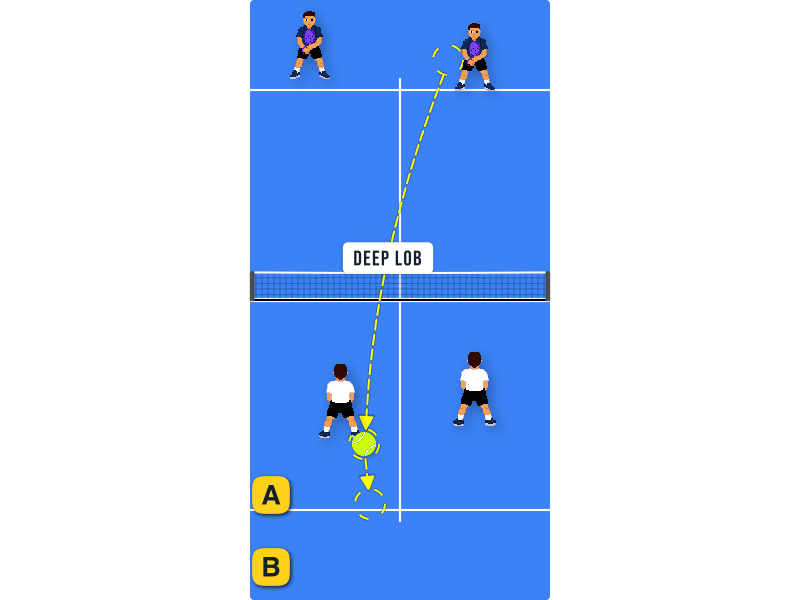
Zone 1: behind the service line, let it bounce
If the lob has pushed you back behind your service line, stop trying to be a hero. Taking it out of the air from here means hitting an overhead off balance, going backwards, with no power and no control.
Let it bounce. The bounce gives you time to set your feet and turn a panicked swing into a calm, deliberate shot.
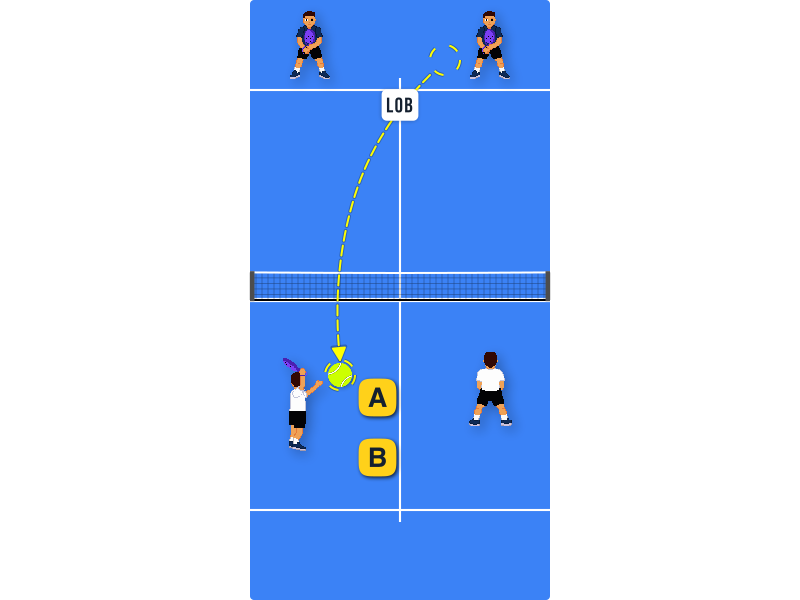
Zone 2: in front of the service line, play slow
Here you can reach the ball in the air, but you are not in a position to hurt anyone. Trying to hit hard from this zone is how short, attackable balls get produced.
Play it slow and high instead. A slow ball buys the seconds you need to recover your position, and that is worth more than a shot that looks aggressive and achieves nothing.
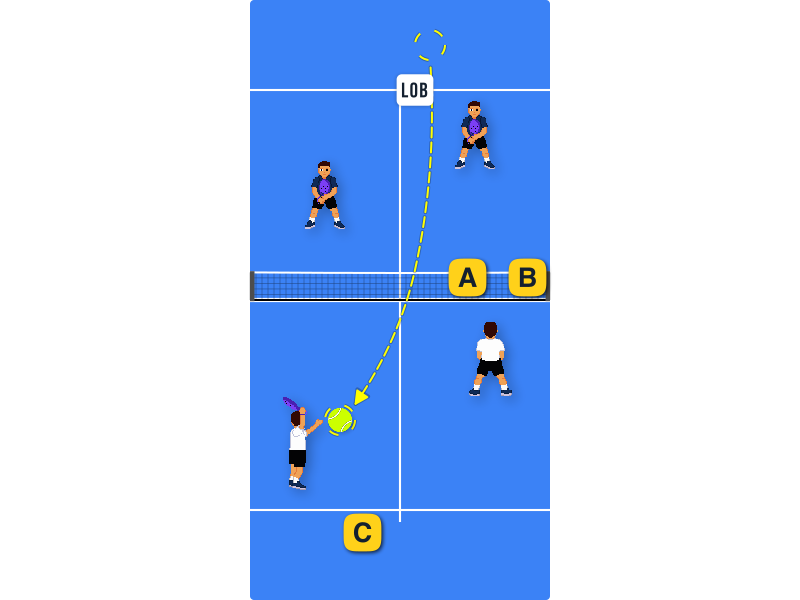
Zone 3: at net position, play fast
Now you are close enough to take the ball comfortably above you and still have your body behind it. This is where the lob has failed and you can start applying pressure.
Play fast. You are not necessarily finishing the point, you are forcing a rushed reply from opponents who expected the lob to buy them time.
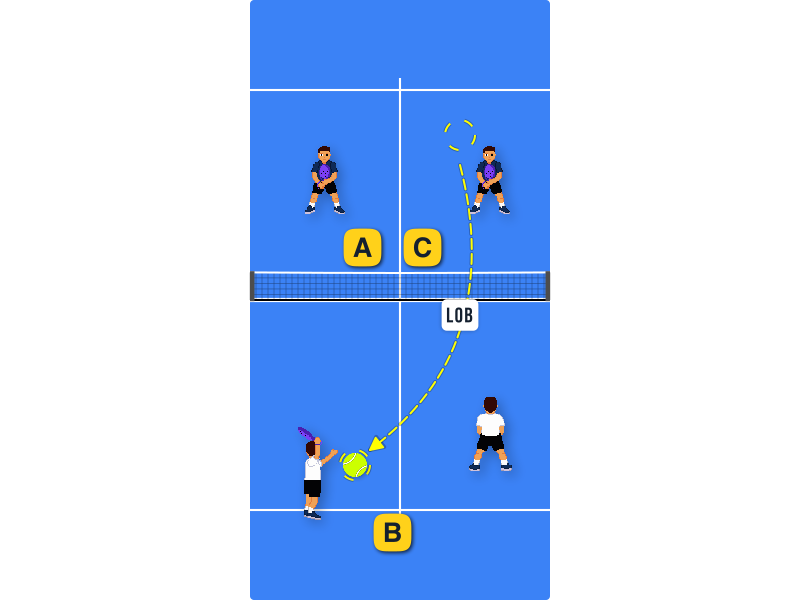
Zone 4: right at the net, smash it
A short lob that leaves you at the net with the ball above you is the one genuinely free shot in padel. There is nothing to think about.
Smash it. This is the zone people daydream about while playing the other three badly.
Know your zone before the lob goes up
Bounce, slow, fast, smash. The lob itself does not choose which one you play. Your position does.
Next time one goes up, notice where your feet are before you move. That is the whole decision, and it takes less time than the scramble you were about to do instead.