Net Movement in Padel: How Your Position Shifts With Every Return
Net position is not a spot you find once and hold. It moves with every single ball, because what your opponent can do changes with every single ball.
There are three common returns, and each one has a correct answer. The middle one is where most players get it wrong.
This is the movement half of net play. For where to stand in the first place, and which of the three balls to give away, start with net positioning in padel.
Your net position is a range, not a spot
Players are told to stand 3 to 4m off the net and they treat it as a parking space. They arrive there, plant, and stay for the rest of the point.
But the right position depends entirely on where the ball just went. A net player who has not moved since the last shot is almost always standing in the wrong place by the time the next ball arrives.
The rule is simple: the ball moves, so you move. Three common returns, three different places to be.
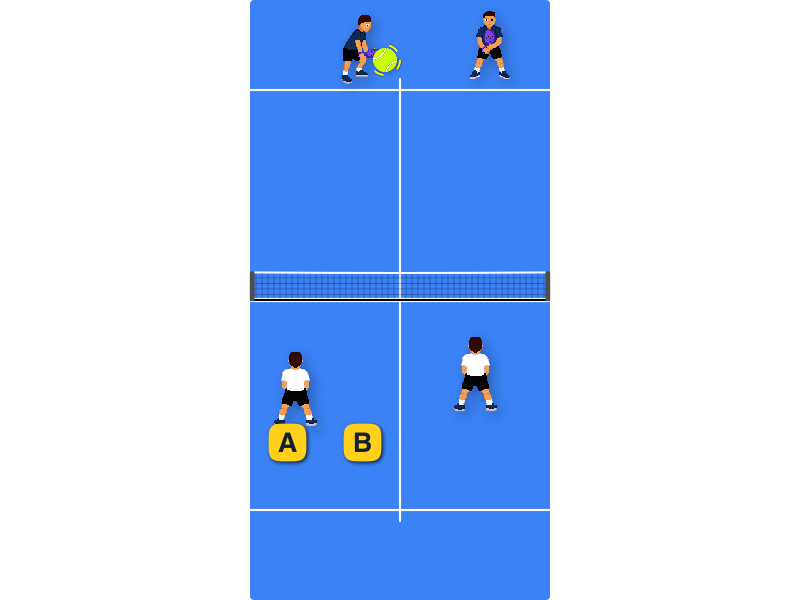
1. Crosscourt to the side glass: step onto the central line
When the return goes crosscourt into the side glass, the danger shifts to the middle of the court. Their best available ball is now through the centre.
So step across onto the central line. You are shutting the shortest route past you and leaving them only the wider, riskier options.
Their reply has to travel the full diagonal, which is the longest ball on the court, so you have time to be greedy. Stepping across to the central line means the middle is shut and you are still close enough to your own line to answer it.
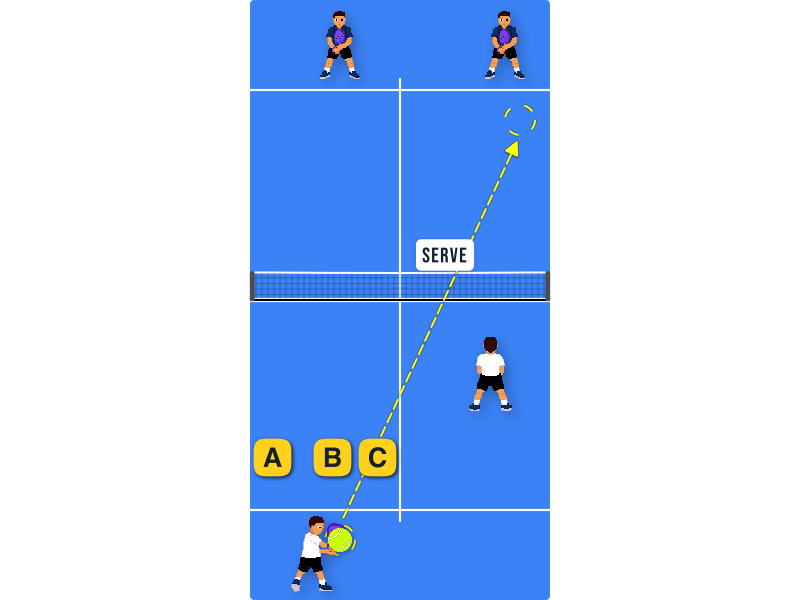
2. Down the middle: pinch towards the centre of your side
This is the one that catches people out. A ball coming down the middle feels neutral, so players stay exactly where they are.
But from the middle they have angles both ways. Pinch in towards the centre of your own half so you are covering the more dangerous side of both options rather than being stranded between them.
A ball down the middle takes their angles away, so there is not much they can do with it. That is your cue to pinch in with your partner and squeeze the space, because the risk of being passed down either line is low.
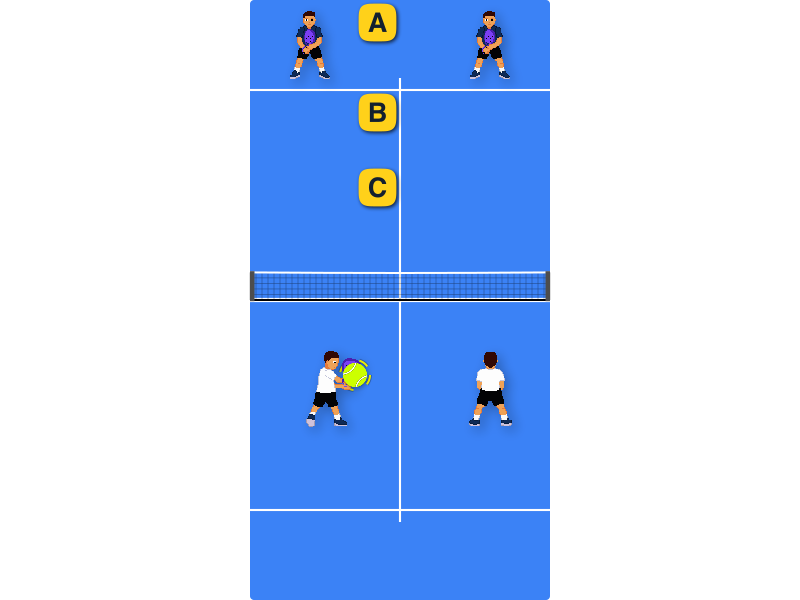
3. Parallel to the side glass: slide to the line
When the return comes down the parallel into your side glass, the immediate threat is the line itself, and it is short and fast.
Slide across to cover it. The crosscourt is now the long ball, which gives you time to recover if they choose it.
This is the one that catches people out. Having played the ball down their line, the shortest and most natural reply is straight back down the same line, and if you are still standing centrally it goes past you.
Move while the ball travels, not after it lands
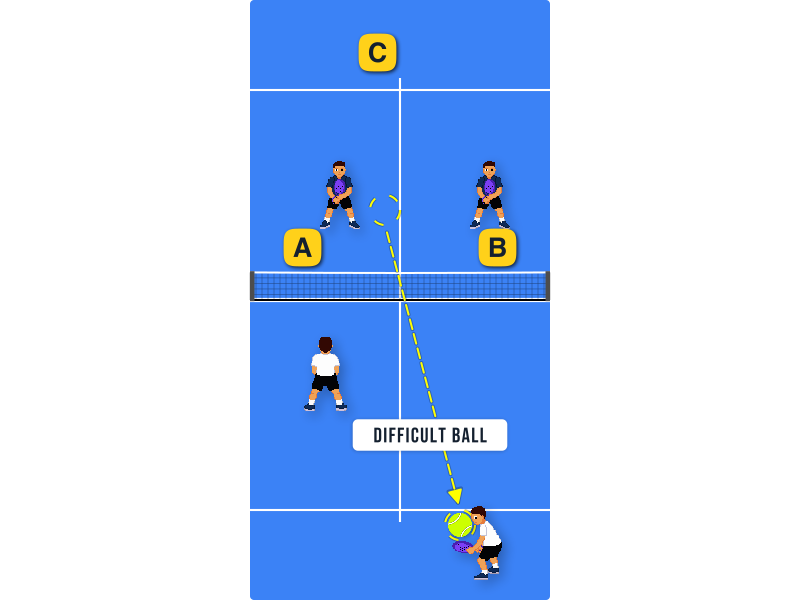
All of this is worthless if you start moving once you see their shot. The adjustment happens while your own ball is still travelling to them, so that you are already standing correctly when they make contact.
You hit, you move, you split step as they hit. In that order, every ball. If you find yourself shuffling sideways as their shot comes at you, you are a full beat late and the shot will feel much harder than it is.
Your partner moves with you
These shifts are for the pair. When you slide to your line, your partner slides toward the middle to cover the space you left. When you pinch in, they pinch in too.
Drift apart and you open the diagonal gap. Think of the two of you as connected by a short rope. Nobody moves alone, and the distance between you stays roughly constant no matter where on the court you both end up.
Move on every ball
Central line, pinch in, slide to the line. Three small adjustments, each triggered by where the return went.
The players who look like they read the game are usually just doing this. They are not guessing earlier than you, they are standing somewhere better.
None of these are big movements. Two steps, usually, made early. That is the entire difference between a net player who looks fast and one who looks permanently stretched.
What goes wrong
Standing still because the last position worked. It worked for the last ball. The next one is coming from somewhere else.
Moving after their contact rather than before it. Late movement looks like effort and achieves nothing, because you are still travelling when you have to play.
Drifting backwards a little on each shot. Three or four balls into a rally you are suddenly in the middle of the court, too deep to volley and too far forward to defend.