The Anti-Lob Cheat Code in Padel: Prepare Early, Let It Bounce
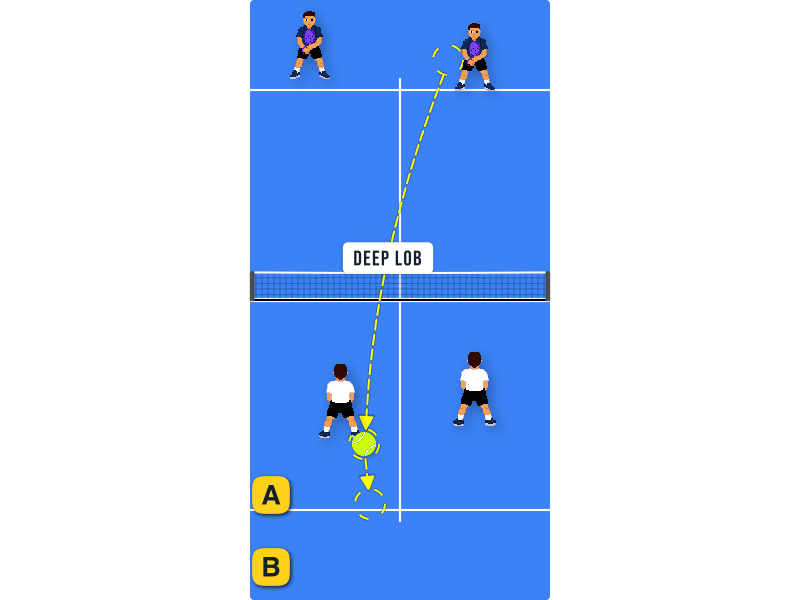
Some opponents lob every single ball. It is not fancy, and it works, because most players deal with lobs badly and give the net away one ball at a time.
The fix is not a better overhead. It is what you do in the first moment after the ball goes up, before you have hit anything at all.
Read the lob before it is hit
The answer to a lob starts before the ball is in the air. Watch what your opponent is doing as the ball reaches them, not where the ball is going.
If they drop under the ball and open the racket face, a lob is coming, and you want to be loaded and ready rather than flat-footed when it does. That is a full second of warning, and a second is an enormous amount of time on a padel court.
Players who look permanently surprised by lobs are watching the ball. Players who never look rushed are watching the opponent's body.
Prepare the instant it goes up
The moment you see the lob leave their racket, turn your body and get the racket up. Do not watch it climb and then react to where it lands.
Most late overheads are not slow feet. They are a late decision. The ball spends a long time in the air and players spend most of it just looking at it.
Preparing means turning and getting the racket up while you are still moving, so the swing is ready before you arrive. Most players do it in the opposite order: run first, then think about the racket once they are under the ball, by which point there is no time left to do anything but poke at it.
Turn side-on, never backpedal
The single most expensive habit here is running backwards facing the net, shuffling under the ball with your weight going the wrong way.
Turn your body side-on and move diagonally back, keeping your eyes on the ball over your shoulder. Turning your back on the ball is its own mistake, and a common one. You cover ground faster, you arrive balanced, and you can still change direction if the lob is shorter than you thought.
You also stay upright. Backpedalling is how people fall over on a padel court, and it is why the shot afterwards is so often a scramble.
Move back already prepared
Travelling backwards with the racket already up is a completely different movement from scrambling and then trying to organise yourself under the ball.
You arrive balanced and with options, rather than arriving just in time to make a panicked swing.
The distance is short. From a normal net position you are only covering 3 or 4m, and you have the whole flight of the lob to do it in. It feels rushed only because the preparation was left until the end.
Bandeja or let it bounce
Once you are moving back there are two answers, and picking the right one is most of the skill.
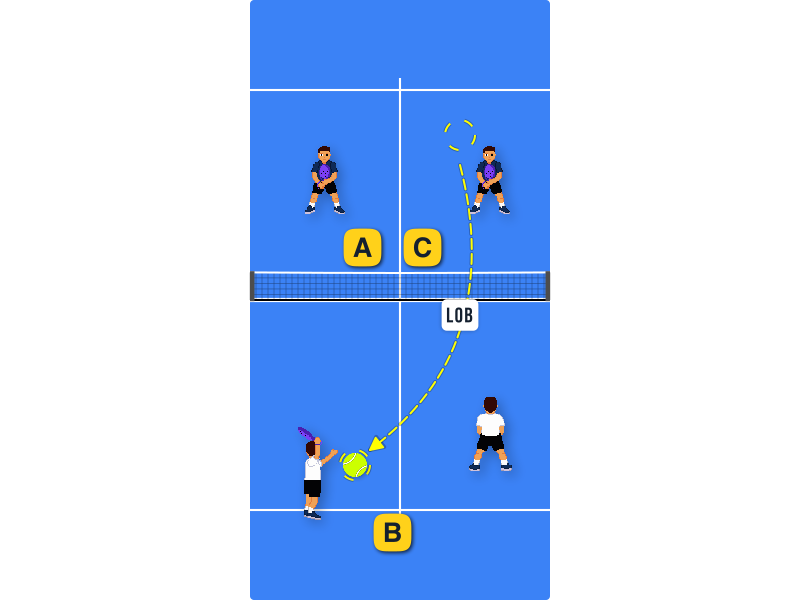
If you can get above the ball comfortably, play a bandeja or a vibora. You keep your net position, they stay pinned at the back, and the point continues on your terms. This is always the better outcome when it is available.
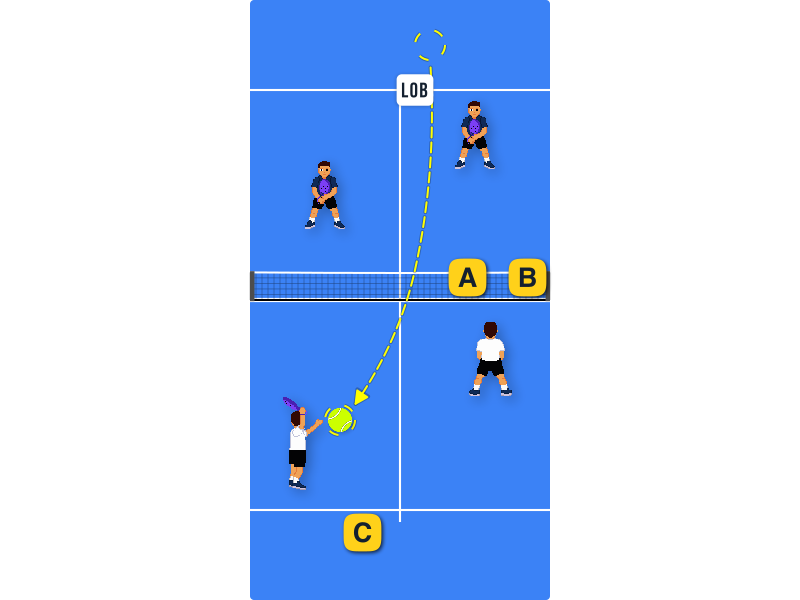
If the lob is genuinely over you, do not chase it into a bad overhead. Let it bounce, take it off the glass, and accept that you are now building the point again from the back. A controlled reset is far cheaper than a desperate smash into the net.
Let it bounce and hold them
Here is the part that feels wrong. Rather than forcing a difficult overhead, let the ball bounce.
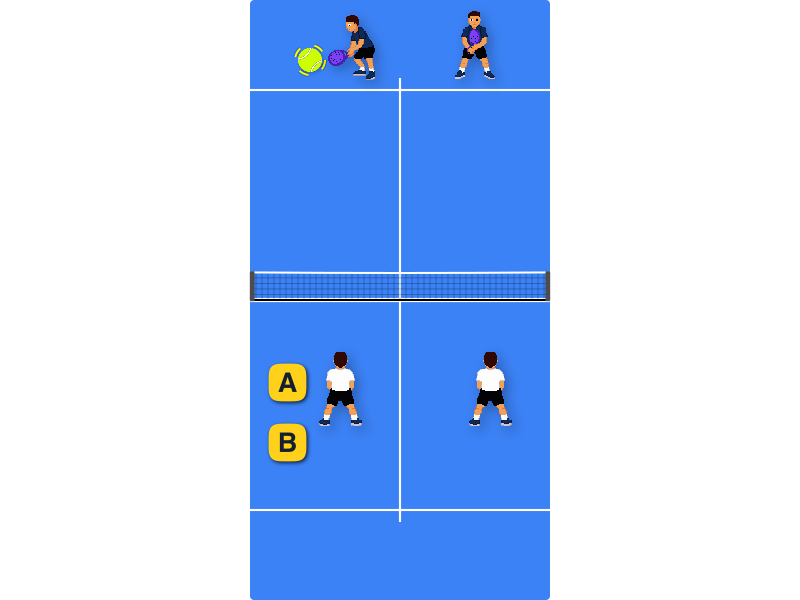
While it is bouncing, they cannot commit forward. They have to hold their positions and wait to see what you do, so the lob has not actually won them the net.
Letting it bounce is not passive. The ball comes off the back glass at a predictable height and speed, which is far easier to attack than a ball dropping steeply over your shoulder. You have traded a difficult overhead for a comfortable one.
Meanwhile they are still at the net, waiting, and every extra second they spend there is a second they are not organising anything.
Call it, every time
A lob down the middle is the classic way for a pair to lose a point without either player making a technical mistake. Both go, or neither goes.
Say who is taking it, out loud, every single time. Then the partner who is not taking it covers the middle and moves with them, so you come back to the net as a pair rather than as two individuals who happen to be on the same court.
Then play at their feet
From a calm, balanced position after the bounce, you have the shot you actually want: a low ball into their feet as they hesitate.
That is the cheat code. Not a bigger smash, just refusing to be rushed by a shot that only works when it rushes you.
Their feet are the target because they are at the net and cannot back away from a ball at ankle height. Anything you send above net height there gets volleyed back at you harder than it arrived.
What goes wrong
Waiting to see where the ball lands. By then the choice between bandeja and letting it bounce has already been made for you, and usually badly.
Backing up flat-footed with your back to the ball. You lose sight of it, you lose balance, and you arrive at a shot you cannot control.
Trying to win the point from under a deep lob. If they lobbed you well, the good outcome is a neutral rally, not a winner.