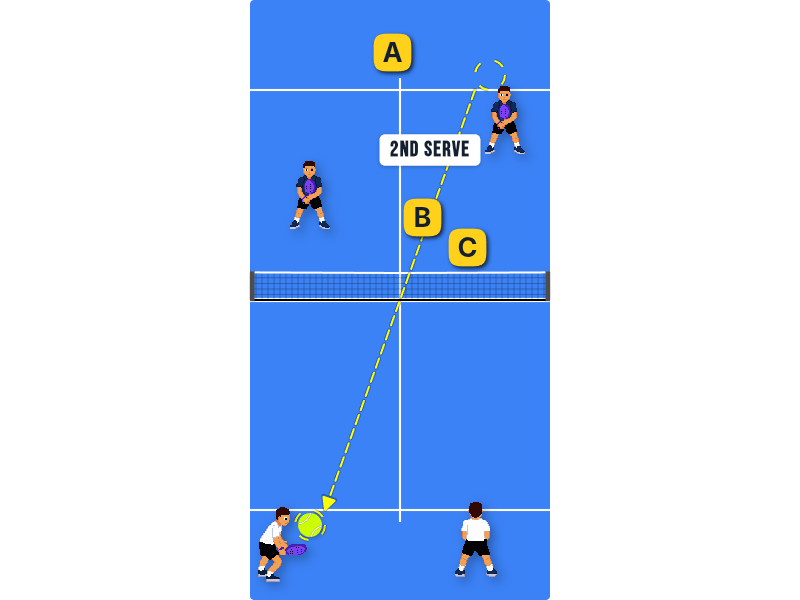
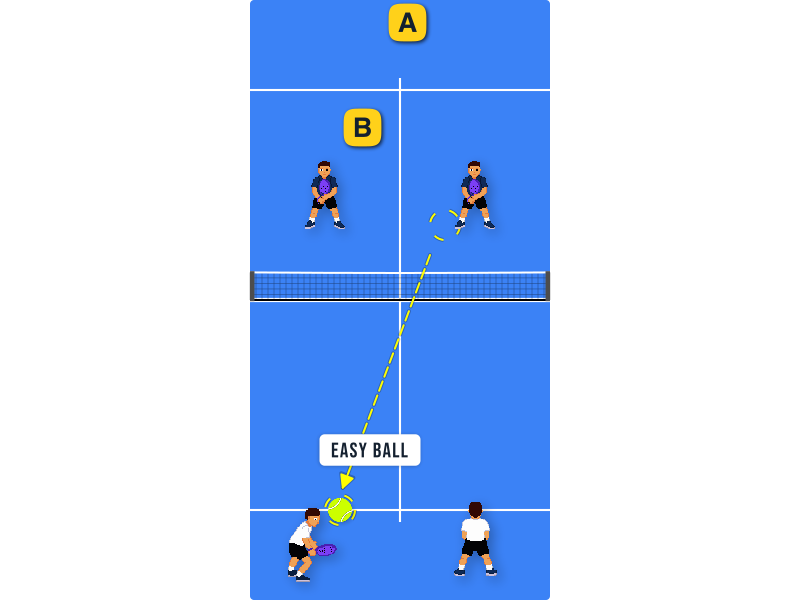
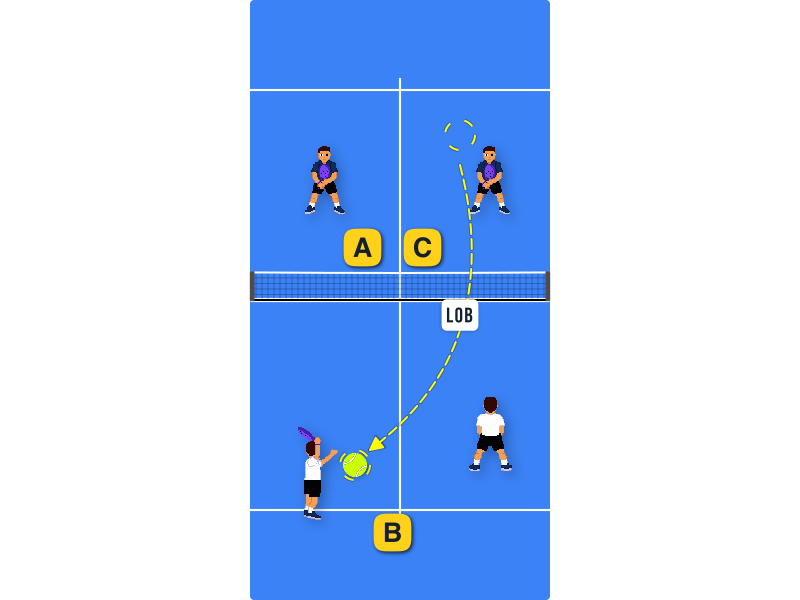
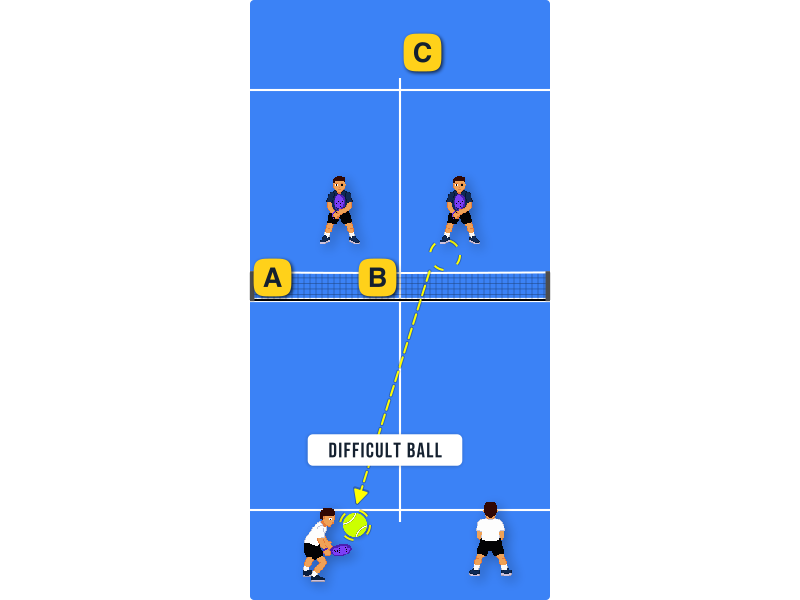
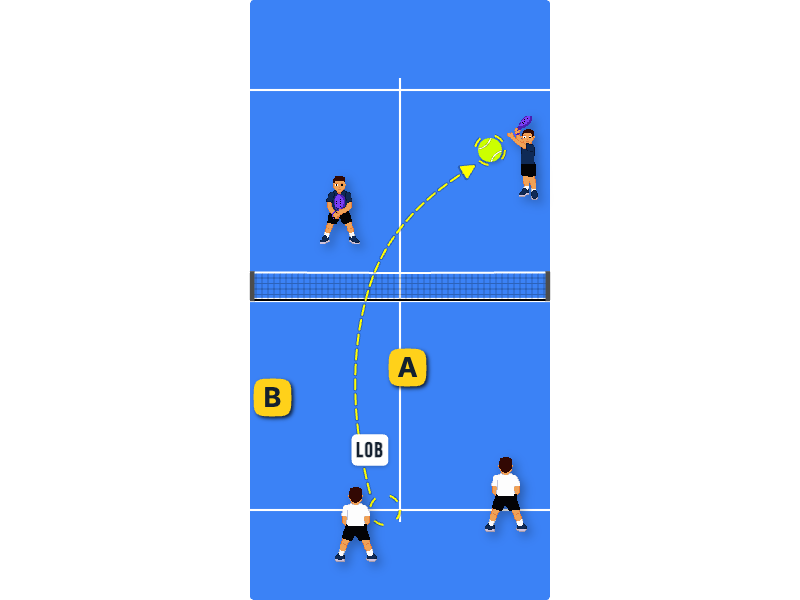
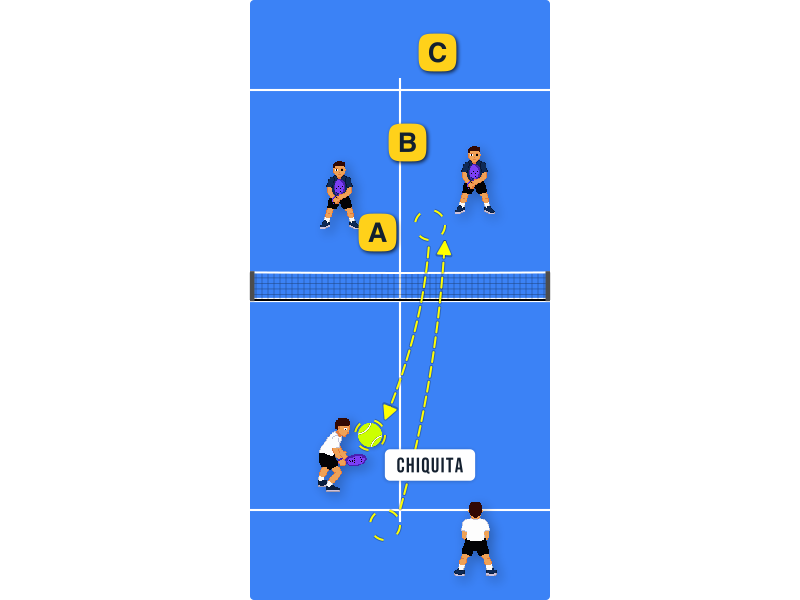
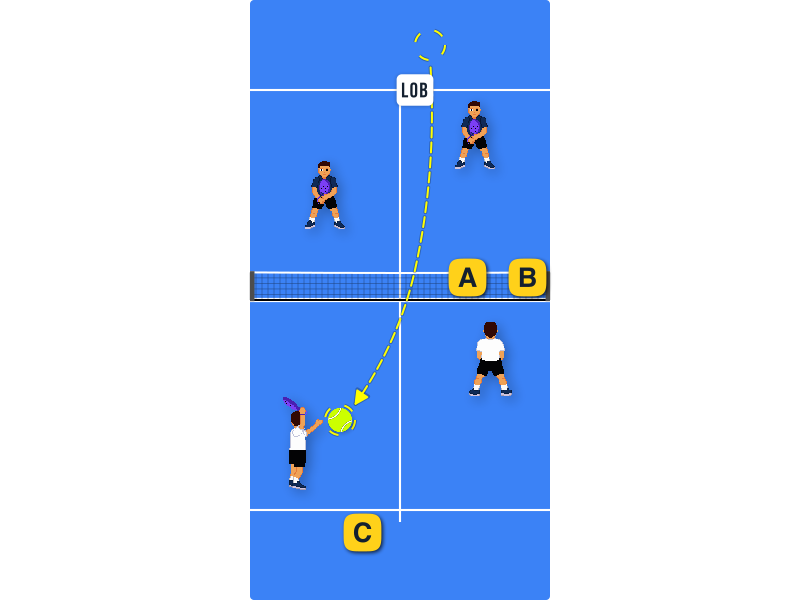
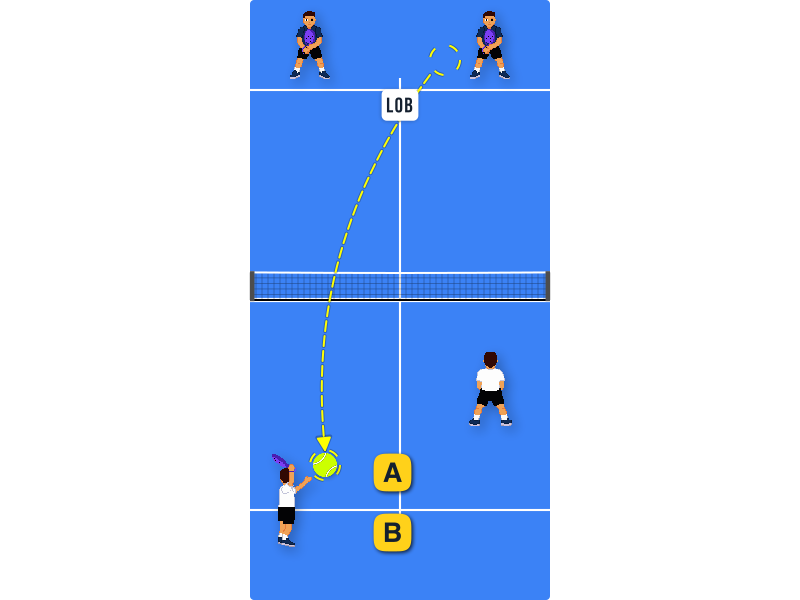
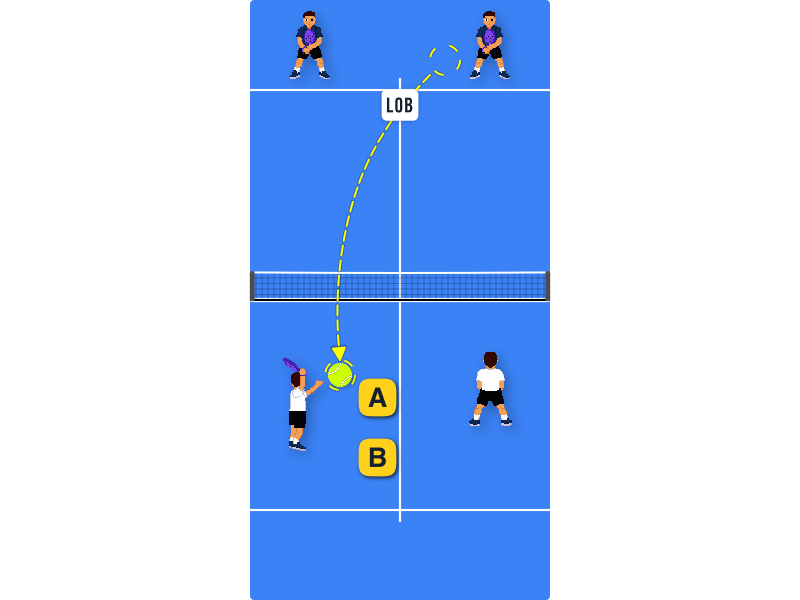
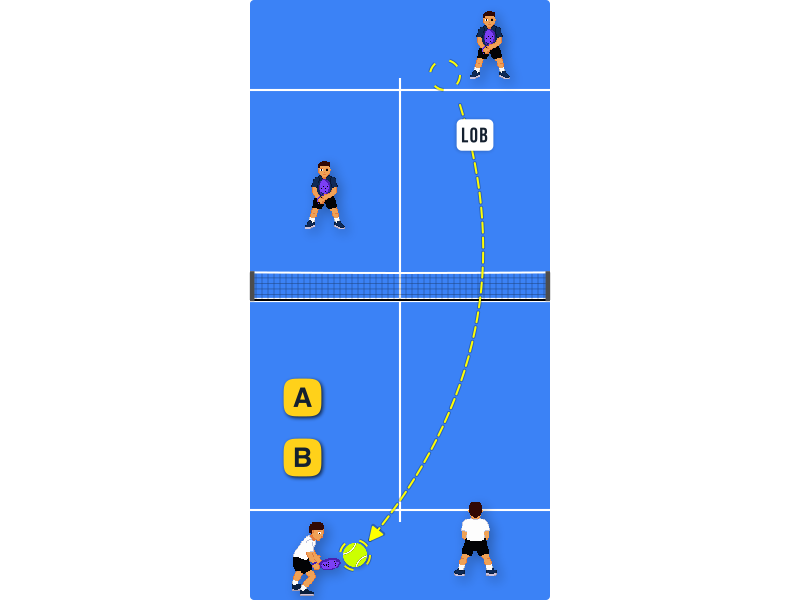
In padel the lob is the most important shot there is, because it is how the defending team takes the net back from the attacking team.
Players coming from tennis often see the lob as a desperate shot. In padel it is the opposite: it is the default answer when your opponents are at the net and you have no clear opening.
Why the lob matters so much in padel
In padel the team at the net is in control. The only way to move them is to send the ball over their heads, so they have to turn, chase it, or play a defensive overhead.
A good lob does two things at once: it pushes the opponents back, and it gives you the time to move forward and take the net yourselves.
When to play a lob
Lob when your opponents are close to the net, when you are under pressure and need time, or when you are pulled out wide and have no safe angle. In that last case a lob that resets the point beats a forced pass: see out wide, lob and reset.
Against a big smasher, a short, low lob can be worse than none at all. See how to return a big smash.
Where to aim
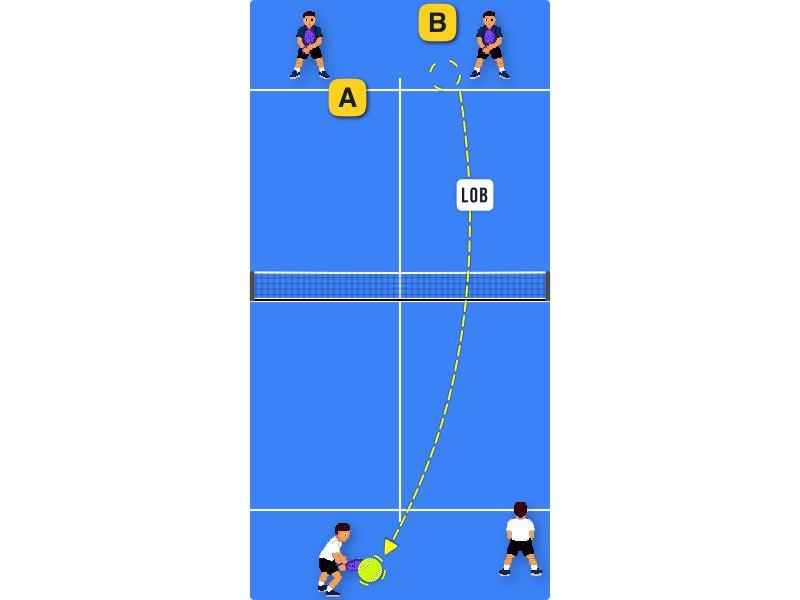
High and deep. The ball should land close to the back glass, so the other team cannot smash it before it bounces, and it is too deep to play comfortably after it comes off the glass.
Over the backhand side of the opponent is the classic target, because an overhead from there is harder. Crosscourt lobs give you the longest distance and more margin; lobs down the middle make the opponents decide who takes it.
What to do after you lob
If the lob is good, move forward right away, together with your partner. You have just made them turn their backs, and the net is free. See where to stand after you lob.
If the lob is short, do not run in. They will smash it, and you want to be back where you can defend. That is the rule in when to rush the net after a lob.
When a lob comes at you
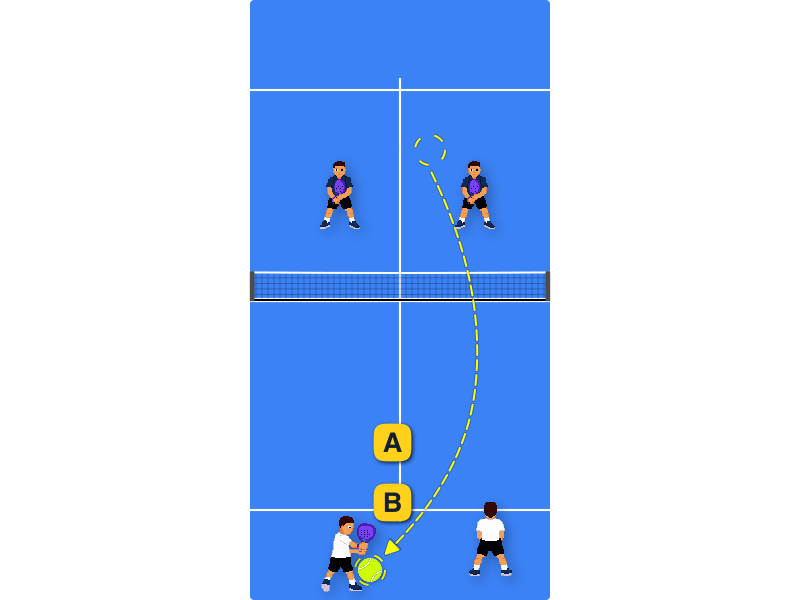
At the net you have three answers: an overhead (the bandeja, vibora or rulo), letting it bounce and defending, or a lob back. Which one depends on where you are standing when the ball arrives.
The 4 zones to receive a lob explain which shot fits where, and play it or let it pass covers when to let it bounce. If you have to run back, don't turn your back on the ball.
Common lob mistakes
Lobbing too low. A lob your opponents can reach without moving back is a gift for their smash.
Lobbing too deep. If it goes long, there is no glass to save it. Aim to bounce before the back glass, not into it.
Watching your lob instead of moving. The lob only works if you use the time it creates.
Lob questions
- Why is the lob so important in padel?
- Because the team at the net controls the point, and the lob is the main way to push them back and take the net yourself.
- Where should a lob land in padel?
- Deep, close to the back glass, ideally over the backhand side of the opponent. Deep enough that they cannot smash it before it bounces.
- Should I go to the net after a lob?
- Yes, if the lob is good. Move forward with your partner. If it is short, stay back and get ready to defend the smash.
- How do I return a lob?
- It depends on your position: an overhead like the bandeja if you are under it, or let it bounce and defend if it is behind you. The 4 zones to receive a lob break it down.