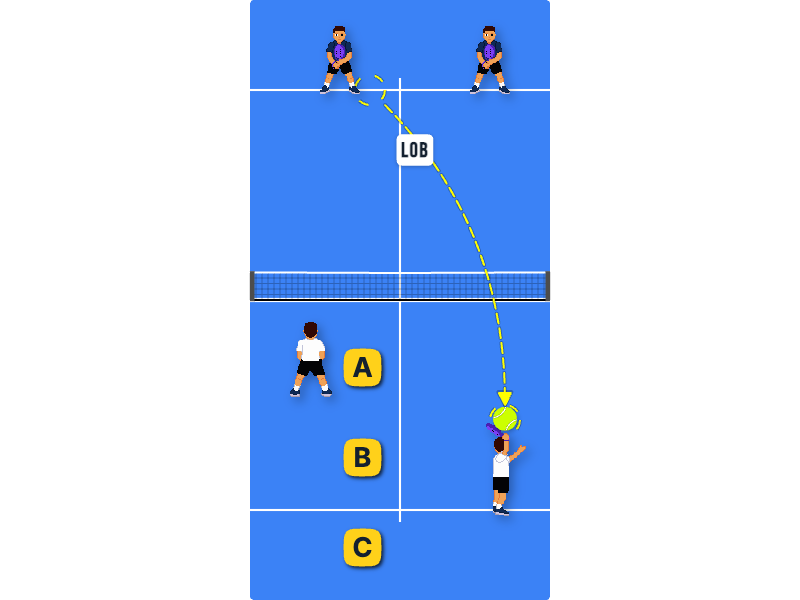
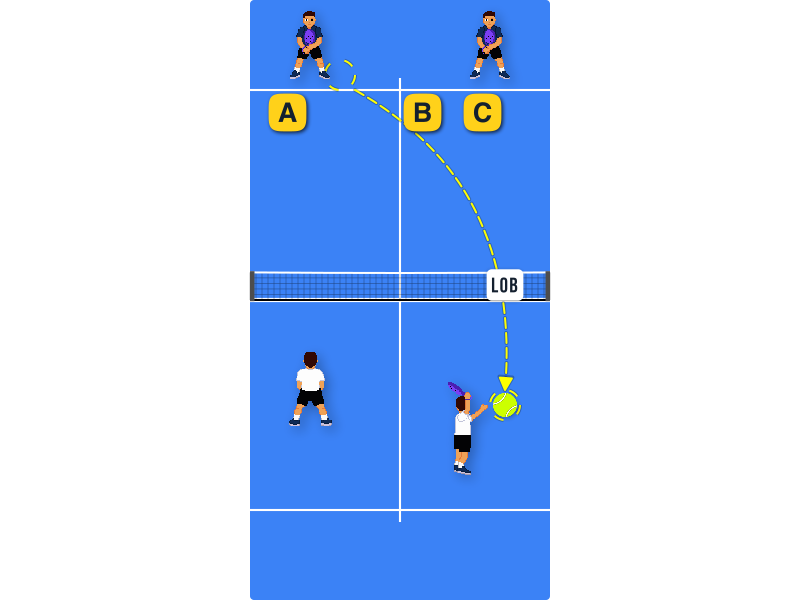
It is the most played overhead in padel, and the one shot that separates players who hold the net from players who keep losing it. You play it when a lob goes over you and you want to keep the net, not win the point.
The name is Spanish for tray: the racket moves like a waiter carrying a tray, flat and controlled, instead of swinging down hard. The point of the shot is that nothing good happens for your opponents after it.
When to play a bandeja
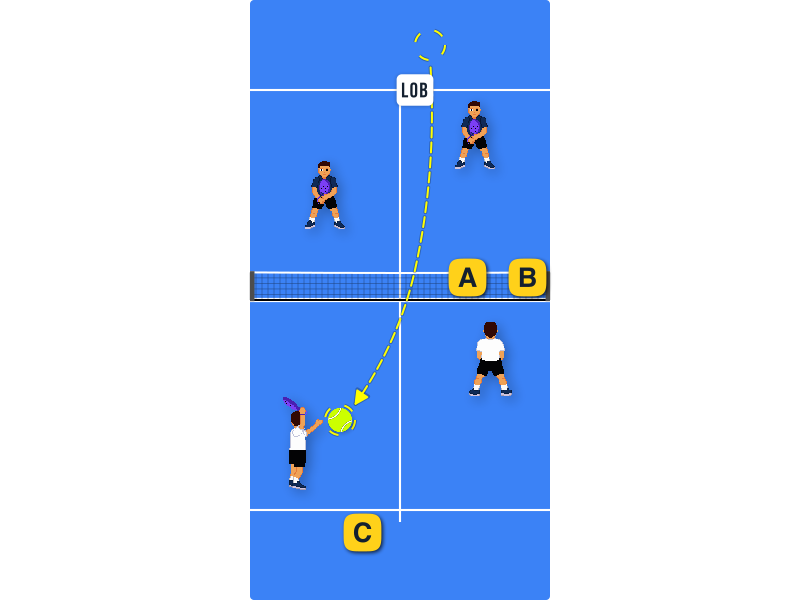
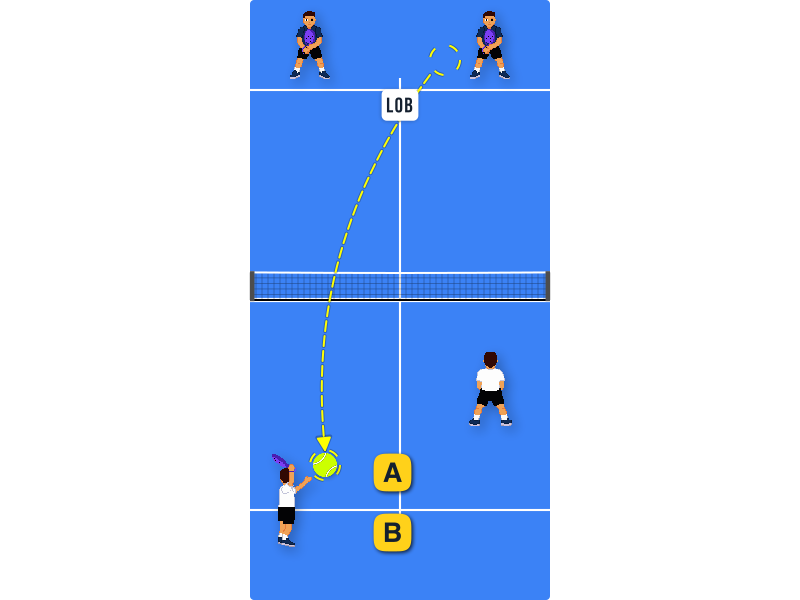
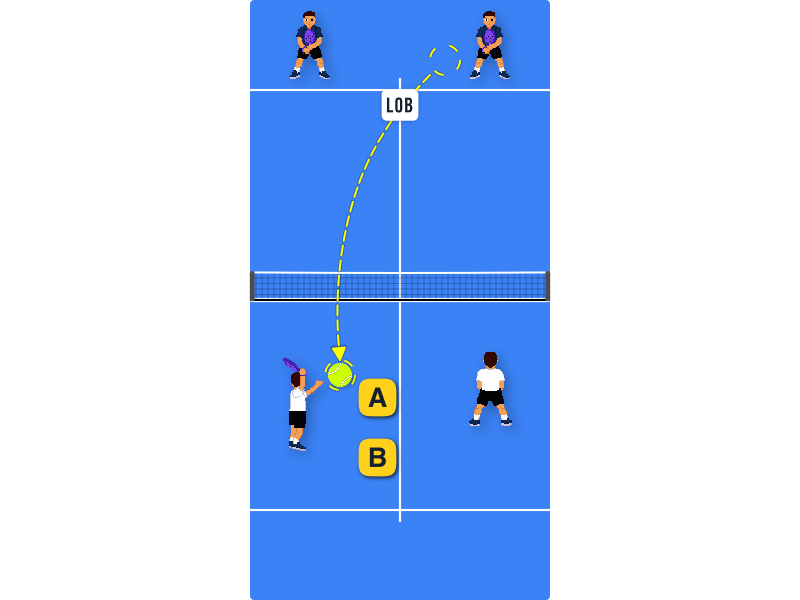
Play it when the lob is good enough to push you back but not good enough to make you turn and run. Typically you are somewhere between the net and the service line, the ball is high, and you cannot hit it hard without risking an easy return.
If the lob is short and you are well under it, a flat smash or a vibora may be on. If the lob is past you and dropping behind, let it bounce and defend instead. The bandeja lives in the middle: the lob you can reach, but not attack.
How to hit it
Turn side-on early, with your non-hitting arm pointing up at the ball. Take small steps back so the ball stays slightly in front of you, never behind your head.
Hit with a continental grip. The racket comes from behind your head in a flatter arc than a smash and meets the ball in front of you, at about head height or a little above. You slice the ball, brushing across and under it, so it comes off the racket with backspin and some sidespin.
Finish across your body and keep the swing smooth. A bandeja is about control: medium pace, low and deep.
Where to aim
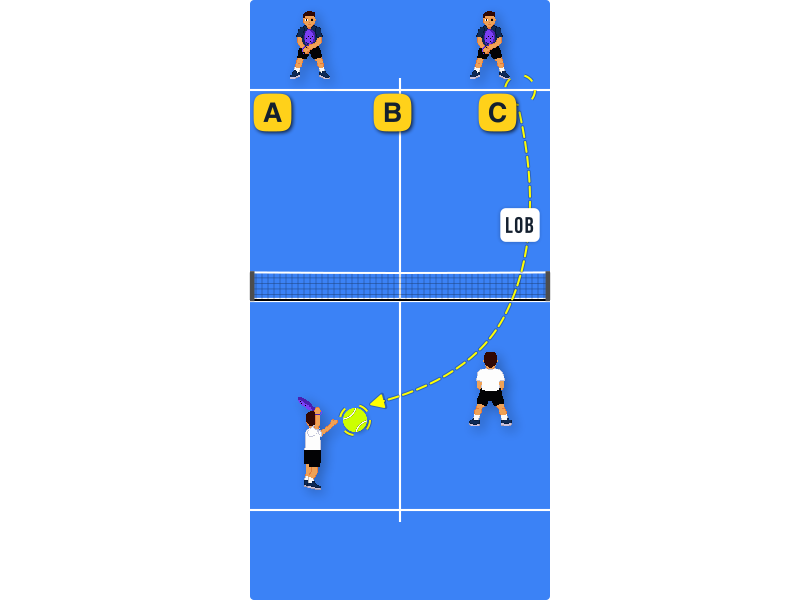
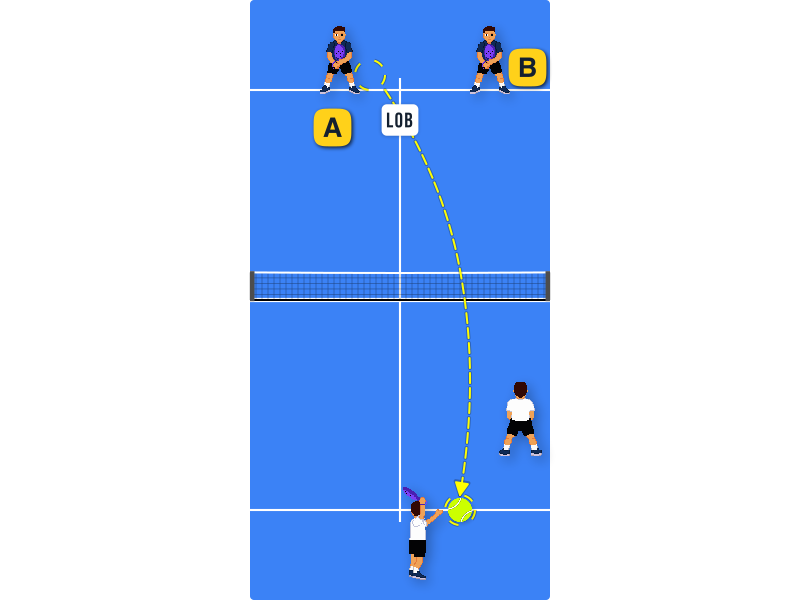
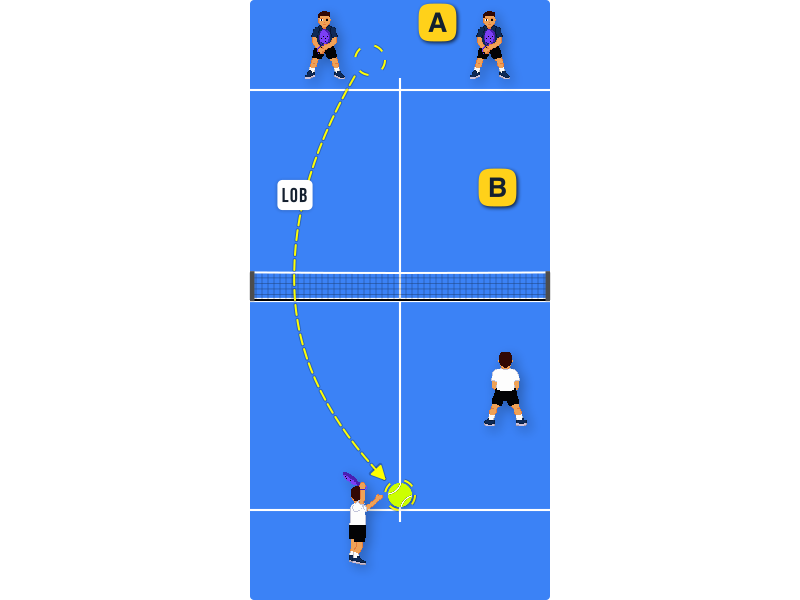
Aim deep, so the ball bounces before the back glass and comes off it low. The backspin makes it die off the glass, which leaves your opponents digging a low ball out of the corner instead of attacking a nice high one.
Crosscourt to the corner is the safe default: it is the longest line on the court and keeps the ball away from the middle of their side. Down the middle, at the gap between them, works too, and it often causes confusion about who takes it.
What to do after the bandeja
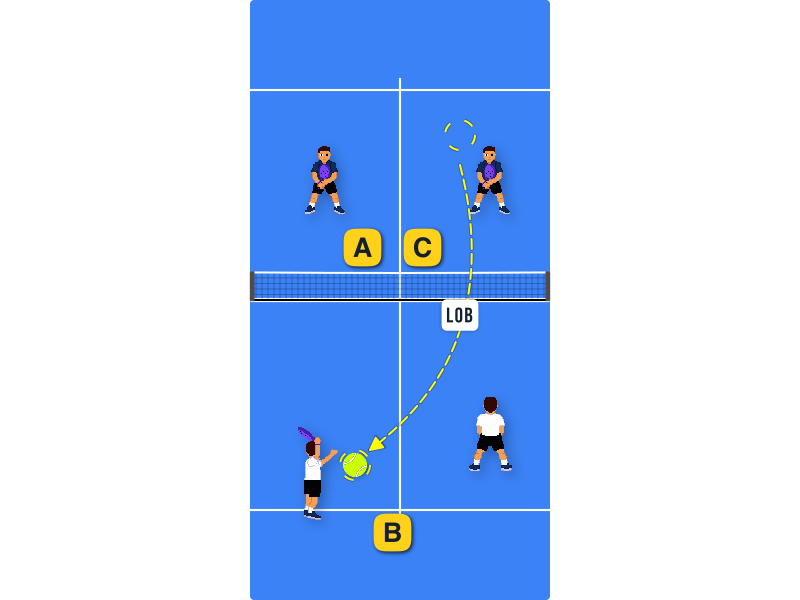
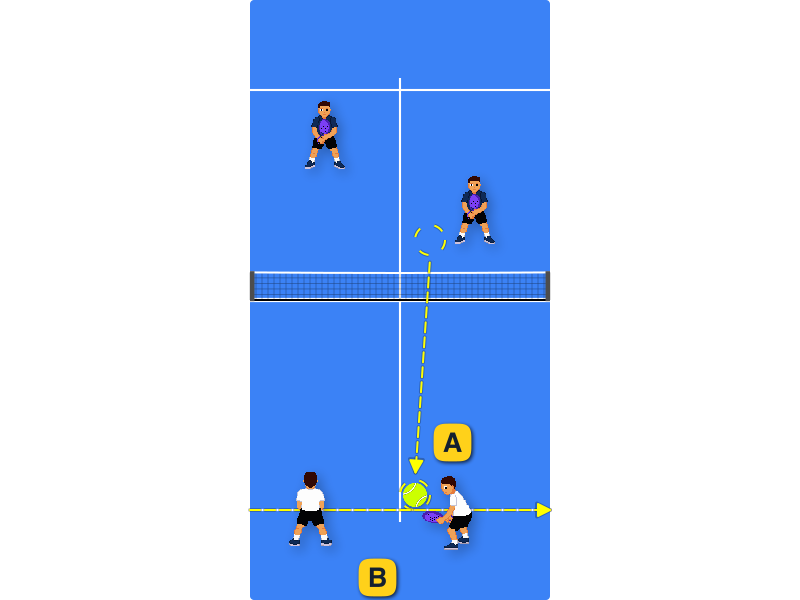
Move forward straight away. The whole point of the shot is to buy time to get back into net position, so if you stay where you hit it, you have spent the time and kept none of it.
Step back in together with your partner, so you do not end up one up and one back. See the diagonal gap for why that split loses points.
Common bandeja mistakes
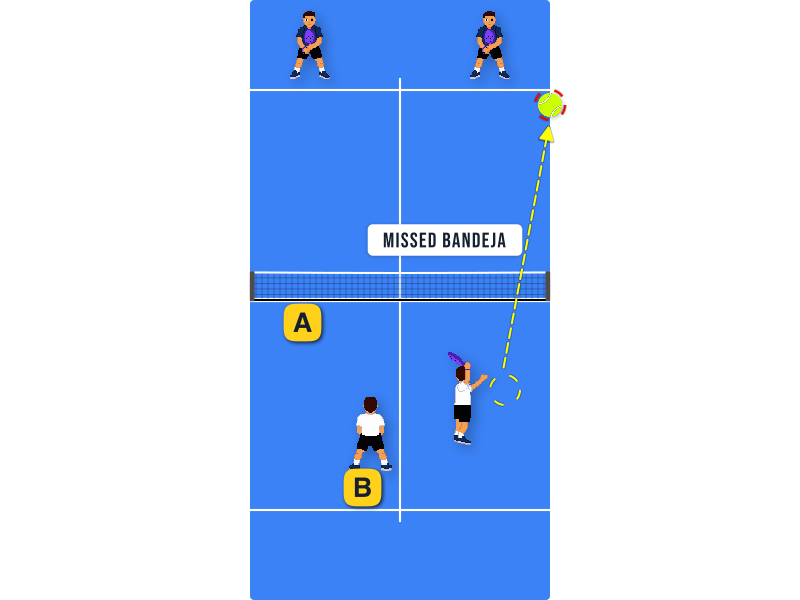
Hitting it too hard. A fast, flat bandeja comes off the back glass high and slow, which is exactly the ball your opponents want. Pace is not the job of this shot.
Aiming short. A bandeja that lands near the service line lets them step in and take the net from you. Depth matters more than anything else.
Facing the net. Without turning side-on you hit with your arm only, the ball floats, and you cannot control the slice.
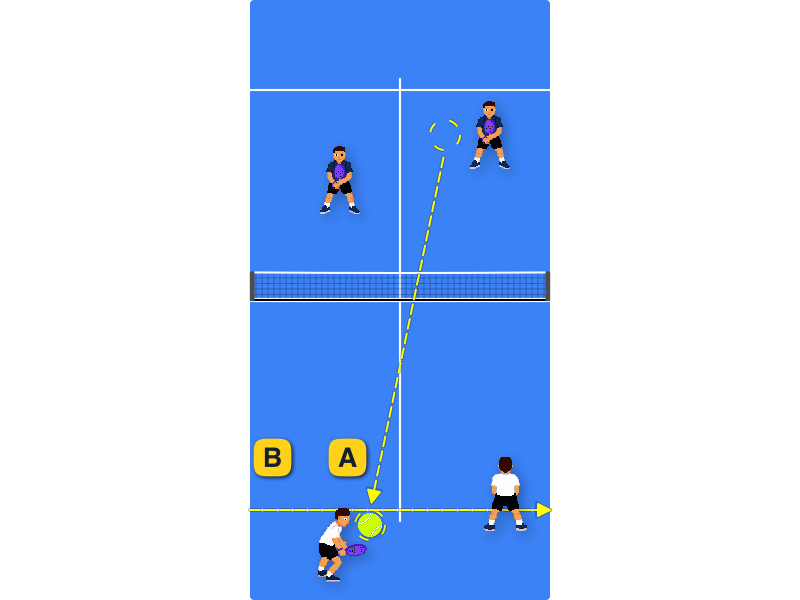
Letting the ball get behind you. Once it is over your head you can only push it up. If you are already late, a defensive lob or letting it bounce is the better answer.
Bandeja vs vibora vs smash
The bandeja is the control option: backspin, medium pace, the goal is keeping the net. The vibora uses the same position but hits faster with more sidespin into the corner, to put the other team under pressure. The flat smash is the finishing shot, played only on a short lob you are well under.
Most points at club level are not won by the overhead. They are lost by the team that overhits it. When in doubt, play the bandeja.
Bandeja questions
- What does bandeja mean in padel?
- Bandeja is Spanish for tray. It names the flat, controlled overhead you play after a lob to keep your place at the net, hit with slice so the ball stays low.
- Is a bandeja a defensive or an attacking shot?
- It is a neutral shot. You are not defending from the back, but you are not trying to win the point either. The aim is to stay at the net and give your opponents nothing to attack.
- What is the difference between a bandeja and a vibora?
- Both are overheads played from a similar position. The bandeja is slower with more backspin and aims for depth and control. The vibora is faster with more sidespin and aims for the corner to put pressure on.
- Where should a bandeja land?
- Deep, so it bounces before the back glass and comes off it low. Crosscourt to the corner is the safest target; down the middle is a good second option.