Move Up Together in Padel: Why One Player Forward Loses the Net
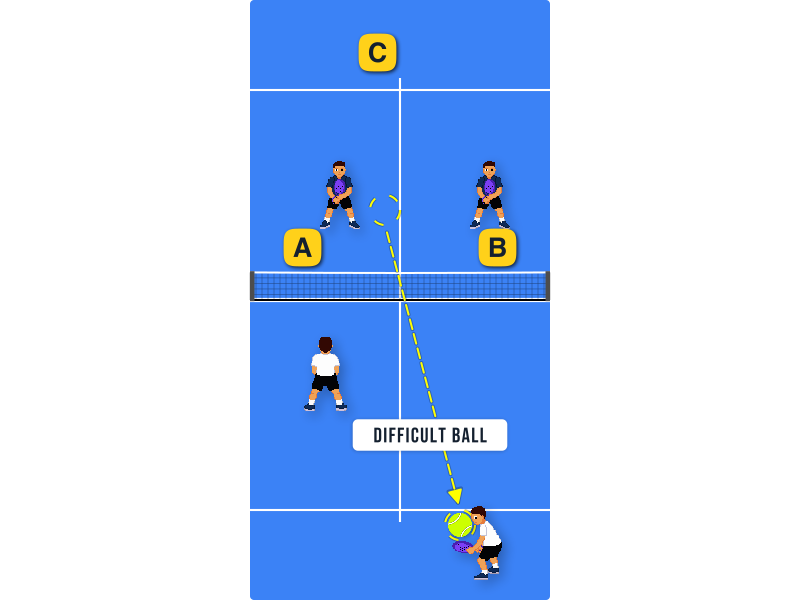
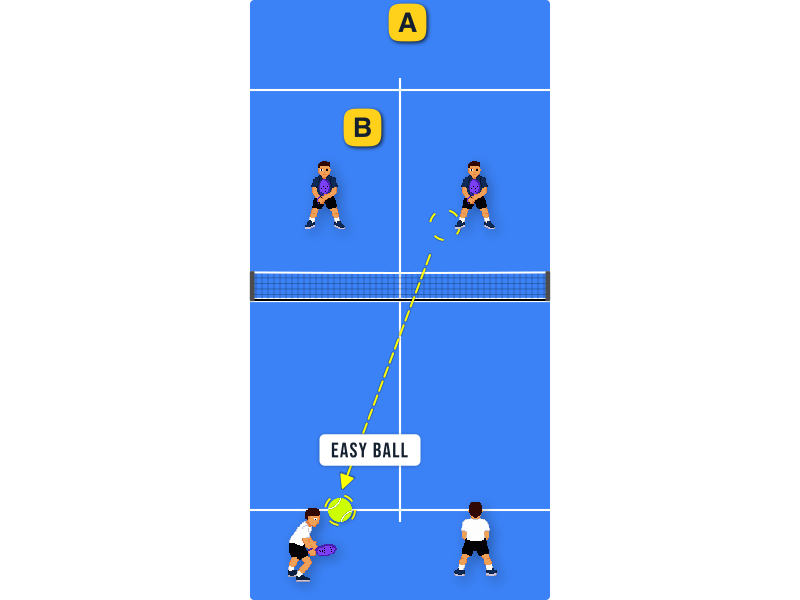
Your lob has pushed them back and the net is available. This is the moment you were playing for, and it is also where a lot of pairs quietly hand it back.
The mistake is not going forward. It is going forward alone.
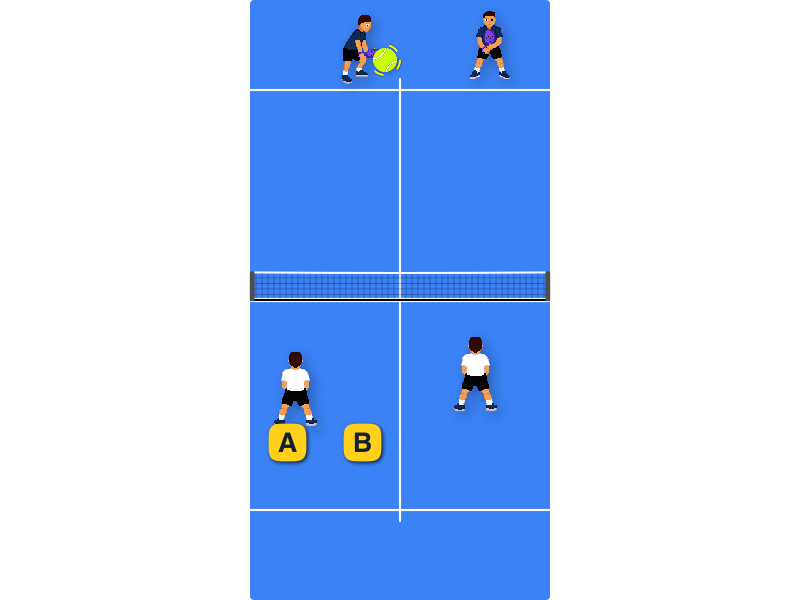
Advance as a pair
Both of you move, at the same time, staying roughly level. You arrive as a line rather than a diagonal.
It sounds obvious written down. In a rally it takes deliberate attention, because the player who hit the lob usually starts moving first and the other hesitates to see whether it worked.
Arriving together means you control the net
Two players side by side at the net cover the width between them and leave no lane through the middle.
From there their options are a lob or a defensive ball, both of which you are standing in the right place to answer. That is what controlling the net actually means.
One player back leaves the space they will use
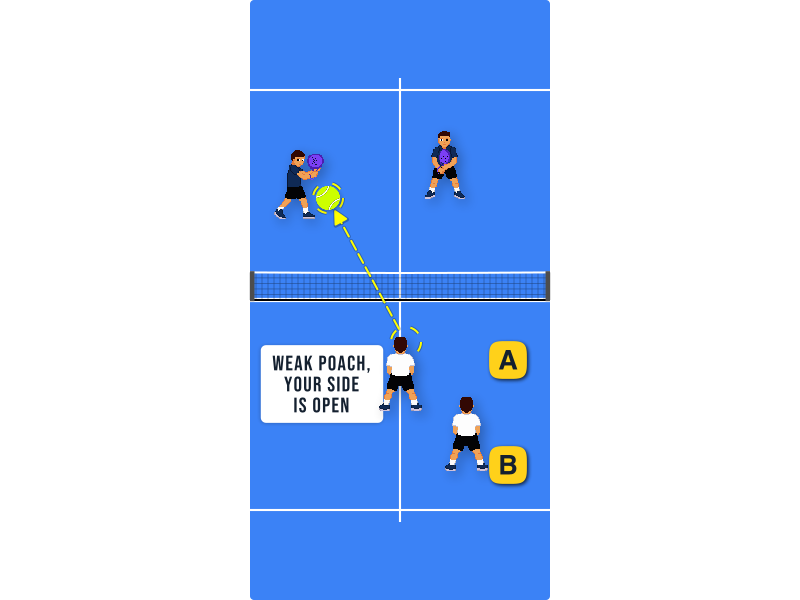
If one of you commits and the other holds, you are split. There is now a large diagonal area belonging to neither of you.
Opponents do not need a special shot for this. They just play into the gap, and the player who advanced cannot turn round in time.
And you end up losing the net anyway
Forced to scramble at a ball in that gap, whoever reaches it produces a weak return. The pair that was attacking is now defending, and the net you had just won is gone.
So the rule is simple, and it costs nothing: if your partner goes, you go. If you are not both going, neither of you should.